Business
Big data indoglobenews.co.id
Welcome to the world of Big Data! In today’s digital landscape, information is being generated at an unprecedented rate. Every click, swipe, and online transaction leaves behind a trail of valuable data. This sheer volume of information has given rise to the concept of Big Data – a term that refers to the massive amount of structured and unstructured data that businesses can harness for insights and decision-making.
But why should you care about Big Data? Well, simply put, it holds immense potential for your business. By effectively utilizing this vast pool of information, you can gain crucial insights into customer behavior patterns, market trends, and even predict future outcomes. With these invaluable nuggets of knowledge in hand, you can make informed decisions that have the power to propel your business forward.
In this step-by-step guide, we will walk you through the process of leveraging Big Data for your business success. From identifying goals and collecting data to analyzing insights and implementing changes – we’ve got you covered! So grab a cuppa Joe (or your preferred beverage), sit back with an open mind, and let’s dive into the world of Big Data together!
Why is Big Data Important?
In today’s digital age, data has become a valuable asset for businesses of all sizes. And when it comes to big data, its importance cannot be overstated. Big data refers to the vast amount of information that is generated every second from various sources such as social media platforms, online transactions, and customer interactions.
One of the main reasons why big data is important is because it provides businesses with valuable insights into consumer behavior and preferences. By analyzing large datasets, companies can gain a deeper understanding of their target audience and tailor their products or services accordingly.
Furthermore, big data allows businesses to make more informed decisions. With access to real-time data analytics, organizations can quickly identify trends and patterns that can help them stay ahead in the market. This enables them to respond promptly to changing customer needs and preferences.
Another area where big data plays a crucial role is in improving operational efficiency. By analyzing large volumes of operational data, businesses can identify bottlenecks in their processes and implement measures to streamline operations. This not only saves time but also reduces costs and improves overall productivity.
Moreover, big data helps companies enhance cybersecurity measures by identifying potential threats and vulnerabilities based on patterns detected in massive amounts of network traffic or user behavior. It also assists governments in making more informed policy decisions based on comprehensive analysis across various sectors such as healthcare or transportation.
The importance of big data lies in its ability to provide actionable insights for businesses across different industries. From optimizing marketing strategies to improving operational efficiency and enhancing cybersecurity measures – big data has truly revolutionized how organizations operate in today’s fast-paced world
Steps to Utilizing Big Data for Your Business
Before diving into the world of big data, it’s crucial to identify your specific goals and objectives. What do you hope to achieve by utilizing big data? Are you looking to improve customer satisfaction, increase operational efficiency, or gain a competitive edge in the market? By clearly defining your goals, you can focus on collecting and analyzing the right data that will help you achieve them.
Step 2: Collecting and Storing Data
Once you’ve established your goals, it’s time to start collecting relevant data. This could include customer information, sales figures, social media interactions, website analytics – basically any information that is pertinent to your business operations. It’s important to ensure that this data is collected efficiently and stored securely so that it can be easily accessed for analysis.
Step 3: Cleaning and Organizing Data
Raw data can often be messy and unstructured. In order to make sense of it all, you’ll need to clean and organize the data before analysis. This involves removing duplicates, correcting errors or inconsistencies, formatting the data properly, and categorizing it into meaningful groups. The cleaner your data is at this stage, the more accurate insights you’ll be able to extract later on.
Step 4: Analyzing and Interpreting Data
This is where the real magic happens – analyzing and interpreting big data to uncover valuable insights. There are various analytical tools available that can help with this process such as machine learning algorithms or statistical models. The goal here is not just crunching numbers but rather understanding patterns or trends within the dataset that can provide actionable insights for your business.
Step 5: Implementing Changes Based on Insights
Finally comes the implementation phase where changes are made based on the insights gained from analyzing big data. These changes could range from refining marketing strategies based on customer behavior patterns or optimizing production processes based on operational efficiency findings. The key here is to translate the insights into actionable steps that can drive positive outcomes for your business
Step 1: Identify Your Goals and Objectives
When it comes to utilizing big data for your business, the first step is crucial – identifying your goals and objectives. This step sets the foundation for all subsequent actions and decisions you take in relation to big data.
Begin by asking yourself what specific outcomes you want to achieve through the use of big data. Are you looking to improve customer satisfaction? Increase operational efficiency? Enhance product development? By clearly defining your goals, you can narrow down your focus and tailor your approach accordingly.
Next, consider how big data can help you achieve these goals. What types of data do you need to collect? Which areas of your business will benefit the most from data analysis? It’s important to align your objectives with the potential insights that big data can provide.
Additionally, make sure that your goals are realistic and measurable. Set clear benchmarks or metrics that will allow you to track progress over time. This will enable you to evaluate the effectiveness of your strategies and make necessary adjustments along the way.
Remember, without a clear understanding of what you hope to accomplish with big data, it becomes difficult to navigate through the vast amount of information available. So take this initial step seriously and lay a solid foundation for harnessing the power of big data in achieving tangible results for your business.
Step 2: Collecting and Storing Data
To effectively utilize big data for your business, the second step is to collect and store the necessary data. This process involves identifying what kind of data you need to collect and where it can be found.
Start by determining which sources are relevant to your goals and objectives. These sources may include customer feedback, website analytics, social media platforms, or even external databases. The key is to gather as much relevant information as possible.
Once you have identified these sources, it’s important to establish a systematic method for collecting the data. This could involve using automated tools or implementing manual processes depending on the type of information being collected.
After collecting the data, it needs to be stored in a secure location that allows for easy access and retrieval when needed. Consider utilizing cloud-based storage solutions or investing in dedicated servers depending on the volume of data being collected.
Remember that accuracy and integrity are crucial when storing big data. Implement proper security measures such as encryption techniques or access controls to ensure that sensitive information remains protected at all times.
By effectively collecting and storing your big data, you’ll have a solid foundation for further analysis and interpretation in later steps. So make sure this step is executed meticulously!
Step 3: Cleaning and Organizing Data
Cleaning and organizing data is a crucial step in utilizing big data for your business. It involves ensuring that the data you have collected is accurate, complete, and consistent. This process may seem tedious, but it is essential to ensure reliable analysis and interpretation of the data.
You need to eliminate any duplicate or irrelevant data. Duplicate entries can lead to skewed results and inaccurate insights. By removing these duplicates, you streamline your dataset and prevent confusion during analysis.
Next, it’s important to address missing values in your dataset. Missing data can affect the accuracy of your analysis, so it’s necessary to decide how to handle these gaps appropriately. You might choose to remove rows with missing values or use techniques such as imputation to fill in the gaps based on existing information.
Another aspect of cleaning and organizing data involves standardizing formats and variables. This means making sure that all entries are consistently formatted across different sources or databases. Standardization enables easier comparison and integration of datasets for more comprehensive analysis.
Consider categorizing variables into meaningful groups or creating new variables based on specific criteria relevant to your goals. This helps simplify future analyses by reducing complexity while retaining valuable information within organized categories.
In conclusion (without using “in conclusion”), cleaning and organizing data sets the foundation for effective utilization of big data in businesses today! By investing time in this crucial step, companies can unlock invaluable insights that drive informed decision-making processes leading them towards growth and success!
Step 4: Analyzing and Interpreting Data
Once you have collected and organized your data, the next step is to analyze and interpret it. This is where the true power of big data lies – in uncovering valuable insights that can drive decision-making for your business.
To begin the analysis process, you need to determine what questions you are seeking answers to. Are you looking for patterns or trends? Do you want to understand customer behavior or identify opportunities for improvement?
With these goals in mind, you can use various tools and techniques to analyze your data. Statistical analysis, machine learning algorithms, and visualization tools can all help uncover meaningful patterns within the vast amounts of information at your disposal.
However, analyzing data is not just about crunching numbers. It also involves interpreting the results in a way that makes sense for your specific business context. What do those numbers actually mean? How do they align with your objectives?
This step requires a combination of technical expertise and domain knowledge. Data scientists or analysts play a crucial role in translating complex datasets into actionable insights that can inform strategic decisions.
Analyzing and interpreting data allows you to gain deeper understanding of your customers, operations, market dynamics, and more. These insights empower businesses to make informed choices that drive growth and competitive advantage.
Remember that analysis should be an ongoing process as new data becomes available over time. By continually refining your analytical methods and adapting as needed, you will continue extracting value from big data on an ongoing basis.
Step 5: Implementing Changes Based on Insights
Once you have analyzed and interpreted the data, it’s time to put those insights into action. This is where the real power of big data comes into play – being able to make informed decisions and make changes that can positively impact your business.
But how do you go about implementing these changes? Here are a few steps to guide you:
1. Prioritize your findings: Not all insights will be equally important or actionable. Identify the key takeaways from your analysis and focus on those that align with your goals and objectives.
2. Develop an action plan: Create a clear roadmap outlining the actions you need to take based on your insights. Set specific goals, determine timelines, and allocate resources accordingly.
3. Communicate with stakeholders: Share your findings and proposed changes with relevant teams or departments within your organization. Get their input, address any concerns, and ensure everyone is aligned with the planned course of action.
4. Test small-scale implementations: Before making widespread changes, consider piloting them on a smaller scale first. This allows for testing feasibility, identifying potential challenges, and refining strategies before rolling out across the board.
5. Monitor progress: Once changes are implemented, closely monitor their impact on key performance indicators (KPIs). Continuously track metrics to gauge success or identify areas that may require further adjustment.
By following these steps in implementing changes based on insights gained from big data analysis, businesses can stay agile in today’s fast-paced market environment.
Common Challenges in Utilizing Big Data and
While big data has the potential to revolutionize businesses and drive growth, there are several challenges that organizations may face when it comes to utilizing it effectively. It’s important to be aware of these challenges and find ways to overcome them in order to fully harness the power of big data.
1. Data Quality: One of the biggest challenges is ensuring the accuracy and reliability of the data being collected. Poor quality or incomplete data can lead to inaccurate insights and flawed decision-making. Implementing robust data validation processes and regularly auditing your data sources can help mitigate this challenge.
2. Privacy and Security: With large volumes of sensitive information being collected, privacy concerns become a significant issue. Ensuring compliance with relevant regulations such as GDPR (General Data Protection Regulation) is crucial for protecting customer privacy rights. Additionally, investing in strong cybersecurity measures will help safeguard against potential breaches.
3. Scalability: As your business grows, so does the volume of data generated. Scaling up your infrastructure to handle increased storage and processing requirements can be a complex task. Investing in scalable technologies such as cloud computing can alleviate this challenge by providing flexible resources on-demand.
4. Talent Gap: Extracting meaningful insights from big data requires specialized knowledge and skills that may not always be readily available within an organization. Hiring or training professionals skilled in analytics, machine learning, and programming languages like Python or R can bridge this talent gap.
5.
Data Integration: Organizations often have multiple systems generating different types of data across various departments or locations.
This creates a need for effective integration strategies that consolidate all relevant datasets into one cohesive view.
Opting for tools like ETL (Extract-Transform-Load) platforms helps streamline this process,enabling seamless analysis across diverse datasets,
By understanding these common challenges upfront,you’ll be better prepared to navigate through them.
The key lies in developing a comprehensive strategy that addresses each challenge head-on while leveraging technology solutions tailored to your business needs.
Big data presents immense opportunities for businesses of
You may like
Business
How Can an Operational Excellence Program Improve Business Performance and Efficiency?

Modern-day companies find themselves operating within a world characterized by changing customer demands, technology, competition, and workforce requirements. For any company to be able to remain effective in its operations, there must be much more to it than good products or services. Efficient processes, competent teams, sound decision making, and a culture for continual improvement become vital.
Operational excellence focuses on improving the way an organization works across different functions. It helps businesses identify unnecessary complexity, strengthen processes, use resources effectively, and create greater value for customers. An Operational Excellence program can help professionals understand these areas from a broader business perspective and develop the capabilities required to lead meaningful improvements.
For professionals who want to strengthen their knowledge of process improvement, operations, leadership, and business transformation, an Operational Excellence course can also provide a structured approach to developing these skills.
Understanding Operational Excellence in Business
The concept of operational excellence does not involve merely accomplishing activities quickly. It involves designing processes which are simple, consistent, efficient, and goal-oriented.
Every organization operates in a manner where there are various interconnected processes. In situations where the communication process is not clear or the process becomes too complicated, the staff ends up using valuable time solving problems that do not really matter in the business.
Operational excellence inspires companies to look at how tasks are performed and see if there might be a better way of doing things. It fosters a culture of continuous improvement rather than waiting until a major problem happens before addressing it.
Improving Business Performance Through Better Processes
Well-designed procedures are a vital aspect of good business performance. The more that employees are aware of their duties and the workflows are well-defined, the better for the team to work.
It is through operational excellence that businesses are able to look at their operations and discover where there might be inefficiencies.
A stronger approach to operations can help businesses:
- Build clearer and more consistent workflows
- Improve coordination between teams and business functions
- Use available resources more thoughtfully
- Align operational activities with broader business objectives
These changes may make it possible to have a situation where teams become more clear about what is expected of them. Instead of always implementing temporary solutions to issues that arise, organizations will take a step back and try to understand the process behind it.
Creating Greater Efficiency Across the Organization
Efficiency is one of the key objectives of operational excellence. But, the concept of efficiency must not be seen as a mere reduction of resource utilization or an increase in the workload of employees.
Efficiency arises out of the simplification of work and giving it meaning. Employees should have an opportunity to direct their energy toward business-value adding activities rather than wasting time on complex procedures.
Efficiency in operations also pushes organizations to think about the relationship between functions. An efficient process from the perspective of one department could be a problem for another department. Examining the entire process allows the managers to appreciate the relationships and make decisions beneficial to the organization as a whole.
This broader perspective can support smoother operations while helping teams respond more effectively to changing business needs.
Supporting Better Decision Making
Good business performance is contingent on making the right decisions. Decision-making in organizations entails making decisions regarding business operations, resource allocation, clients, technology, personnel and other future considerations.
Operational Excellence allows managers to be decision makers with knowledge of how processes within their organization work and their results. Instead of reacting to situations that arise, management will look at what causes these situations to arise and what should be changed.
This methodology facilitates better decision making. This strategy can help organizations open up the lines of communication when it comes to any operational issues that may be present.
Encouraging a Culture of Continuous Improvement
Operational excellence program is most effective once it has been ingrained into the organizational culture. Sustainable improvement cannot solely rely on top-level executives. All employees from different departments should be free to bring forward issues and propose improvements.
The culture of continuous improvement ensures that employees stay curious as to how their work could improve. It also gives managers a chance to hear from those who deal with processes on a daily basis.
Leadership is crucial in the creation of such a culture. Leaders should be able to communicate priorities effectively, foster collaboration, and create a climate where improvement is the collective responsibility of everyone.
Understanding the reason for implementing operational change will ensure that employees participate in the process of improvement in a constructive manner.
Strengthening Leadership and Operational Capabilities
Operational excellence requires a combination of technical knowledge and good leadership. Process improvement may require the reallocation of duties, technological changes, workflow changes, or getting people to work differently.
This implies that professionals must have skills which surpass mere process skills. Communication, problem solving, strategic thinking, change management, and collaboration all play roles in improving operations.
Operational learning will assist practitioners in understanding how these skills interrelate. It will equip managers with knowledge on how to analyze problems of operations from a wider business perspective while taking into account the implications of their decision-making on their people and other stakeholders.
Connecting Technology With Operational Excellence
Tools such as digital technologies, automation, data analysis, and artificial intelligence have transformed organizational operational management. Nevertheless, technology adoption does not necessarily lead to operational excellence.
Firstly, companies need to analyze their procedures and identify areas where technology can bring some improvements. An implementation of a flawed procedure without analyzing its design could just mean that the problem would persist but in another way.
Operational excellence aids in linking technological choices with real business needs. It ensures that any form of digital transformation is geared towards enhancing processes, enabling people, sound decision-making, and better customer experience.
Conclusion
Operational excellence will enable the company to develop an increased connection between the human, process, technological, and strategic dimensions of the firm. Through better process design and decision-making, as well as a culture of continuous improvement, operational excellence can be achieved.
It is important to point out that operational excellence is beneficial not only for process improvements. Operational excellence helps managers and employees to think critically about the value creation process and further development of business processes.
In conclusion, operational excellence is all about creating an organization that operates in a clearer, more consistent, and focused manner. Organizations that embrace continuous improvement in their operations become more agile, efficient, and better positioned for future challenges.
Business
Things To Know When Operating A New Business Overseas
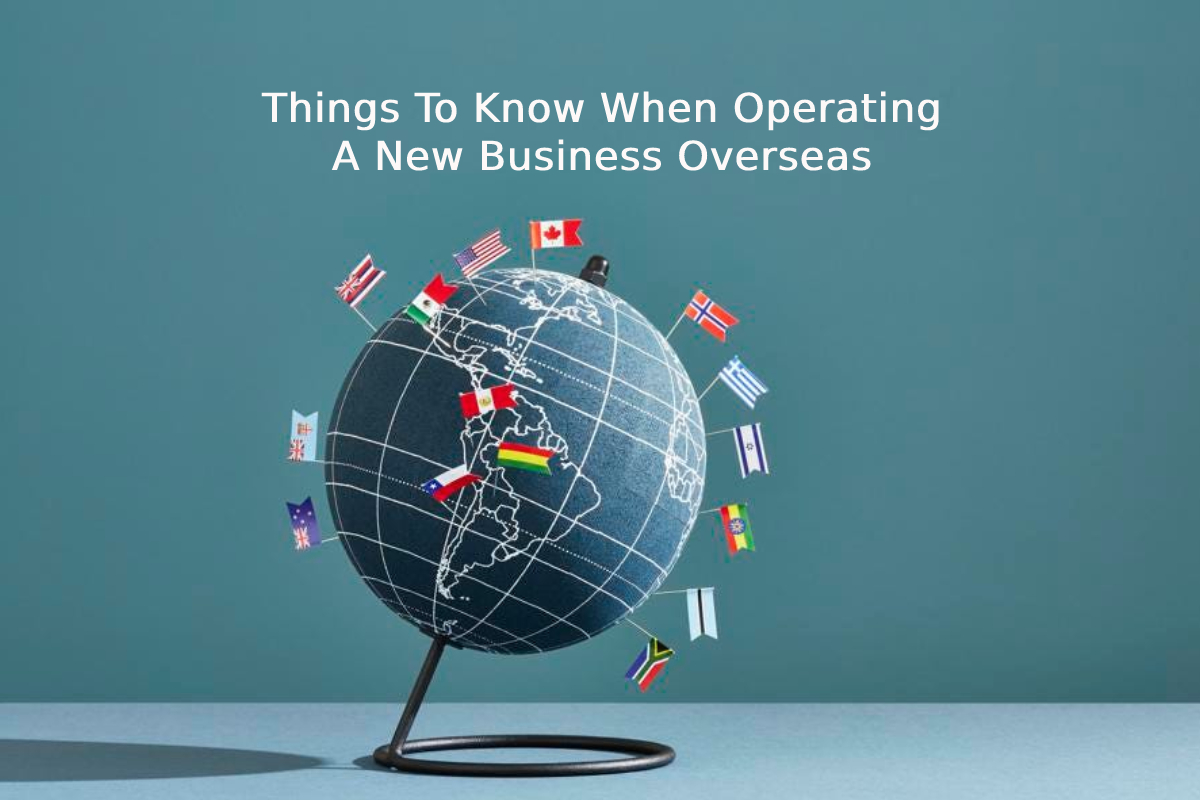
Many people have dreamed about living in another country. Instead of taking a holiday, you may relocate to another country and make a new life there. One of the finest methods to start a business overseas and settle there. Most people who want to establish a new business in another country are concerned about their chances of success.
Establishing a new business overseas can be emotionally and financially gratifying, provided you research, set realistic goals for yourself, and avoid or account for the inevitable challenges of every new enterprise. All new ventures are risky.
Nearly 50 % of new businesses overseas end up as failures within 4 years, and one in every four businesses fail within the first year in the United States, arguably one of the friendliest environments in the world for entrepreneurs.
Image:https://montereypremier.com/wp-content/uploads/2021/01/plane-841441_1920-980×651.jpg

This article will inspire you and reassure you that doing business overseas is still doable. The important things you need include a customer base for your products, and you must strictly follow the rules of the local government. Once everything is in place, you may fly to any country you like and start your business there.
Furthermore, if you do not plan to relocate permanently, be mindful that you will sometimes be far from your workplace or home. Let’s look at some important things you need to know about starting a new business overseas.
-
Choose The Right Country
You must be certain about where you wish to establish your company before traveling and starting your business overseas. Several things will determine your final destination. The environment of the area can have a significant impact on how you handle the move. For example, moving from a tropical climate to a cooler one can be a difficult transition, and it may take some time to adjust.
Before moving your money there, you should study the country’s economic and political stability. You can’t start a business in a region where you can’t sleep soundly or where you’re not certain if the product’s value will drop, and you’ll lose money.
Image:https://assets.entrepreneur.com/content/3×2/2000/1598470780-GettyImages-1148772285.jpg?auto=webp&quality=95&crop=16:9&width=675

-
Learn The Language And Culture
You should anticipate constant interaction with the residents while starting a new business overseas. Whenever a new business is established, people living near it are always suspicious. They want to understand your company strategy, how you treat them, and how you view their lifestyle. Nobody likes to give up their traditions and culture, as you probably already know.
Try to learn the local language because it makes blending in with the community and communicating with others easier, which improves your customer service. When you eventually settle down, the language will start to creep in. As a result, your business strategy should not go against the people’s traditions in the country where you intend to settle.
-
Market Evaluation Is Essential
When launching a business in a foreign country, market research is critical. You should be aware of two things while you conduct your research. First and foremost, you must identify your target customer and what they desire. You should be aware of people’s preferences, the elements they evaluate when purchasing different products, and the ones that lead them to other businesses. You’ll also want to understand a little bit about your rivals.
You should also be aware of the previous product performance you plan to introduce. Knowing how other traders in your industry have performed can help you assess the growth prospects of any capital funding in the area. If your rivals have grown, you could invest a good amount of money in the market and acquire clients.
-
Make Your Business Legal
Every country has its own set of rules for conducting business. Registering is the first step when you begin your firm in a foreign country. For your convenience, you should also register trademarks later. Learn about business registration and licensing criteria, as these may be supplied separately in some areas.
Image:https://media.smallbiztrends.com/2013/12/Legal-checklistEdit.jpg

You may require a local business permit to conduct small enterprises and operations such as retail stores and supermarkets. You will, however, need to register as a company if you are in the manufacturing, assembly, or supply business. To finish the registration procedure, you can hire an attorney or go to a licensed company formation agent.
-
Create A Website
Digital marketing is important for all types of businesses today. As a company, you would like to reach out to more people locally, across states, and internationally. Different marketing methods are necessary, but you must use social networking sites, content marketing, and PPC to attract more customers digitally. It would be beneficial if you did not overlook SEO and long-term customer flow.
Digital marketing, on the other hand, has something in common with all other forms of marketing. Customers interested in your projects must click on a link or a button to learn more about your company and items. As a result, you must have a website where customers can learn more about your company and connect with it. Ensure that your contact information is on your company website and make it mobile-friendly.
-
Build Trust
The trust factor is the most important in any business. When you create a new site, it is important to build a trust factor so the customers will return to your website. You can get the trust factor with an SSL certificate.
For business, use Comodo SSL for multiple domains and subdomains because it secures both under single protection. Also provides the highest validation and makes your website trustworthy; it wins customers’ trust over the website.
Yes, the SSL Certificate will not only secure your domain. If the site has numerous domains and subdomains, then a reliable multi domain like Comodo SSL for a multi domain SSL certificate is essential.
-
Build Connections
In every element of our lives, relationships are crucial. To ensure that your businesses run effectively, you must work with people familiar with the environment and the criteria you must meet. When you decide to relocate to another country, you should contact firms and individuals who can assist you in getting started.
Image:https://www.internationalcitizens.com/wp-content/uploads/2018/10/How-to-Start-a-Business-as-An-Expat.jpg

Relationships can help in creating long-term trust between you and your connections. Your network may help you in various ways throughout your organization and provide any aid you may require during difficult times. It would be beneficial if you did not overlook your competition, as they are critical to your company’s success.
-
Begin With Freelancers
When starting a business in a foreign country, one of the most common concerns is how to manage personnel. How will you pay your employees? In a foreign country, what terminology do you require? What about insurance and taxes? These things could take up much of your time, money, and mental energy.
Managing personnel has never been simple and is unlikely to become so soon. As a small venture, you should consider running your company without having formal on-site employees. The workforce may not be required in the early phases of a business until a customer base has been established. As a result, hiring freelancers for certain jobs and paying them daily or hourly is preferable.
Wrapping Up
It is also your responsibility to ensure that the personal information of the users visiting your site is safe and protected. Experts recommend installing an SSL certificate on your website can improve customer trust.
Business
Level Up Your Business with Vinyl Banners

If you have never used a banner to showcase your business, you may miss out on the significance of signage. The truth is that every business, whether big or small can rely on banners to pick steam. One of the most significant aspects of choosing a vinyl banner is that it offers you a rather inexpensive of letting the customers know about the existing products and services.
The custom banners look professional and make a bold statement at a nominal rate. So, if you are ready to make an impact, the custom vinyl banners may provide you with a host of opportunities to make a mark. The advertisement requirements of a business keeps on changing based on the seasons, so you need to know how to customize the banner to meet your needs.
Reasons to rely on vinyl banners:
The vinyl banners present the most effective mode of advertising. It is lightweight and highly durable for businesses. If you know how to use the banner, here are the reasons to install them.
-
Quick solution for visibility
When it comes to using a vinyl banner, you need to customize each aspect to make it more brand-friendly and easily reaches the customers. The customized banners are visible from a distance as you must have customized the size preferences based on where to hang it appropriately. If you are planning to hang the banner, it is necessary to check whether it comes with pole pockets, hem, or grommets for hanging.
-
Durable banner
A banner needs to combat with the weather elements when you hang it outside and it is preferably used on the window frames and wall covering. The vinyl banner is known for its durability and it is highly affordable. You can get a banner in the desired shapes and colors and make it last through the elements. With a custom vinyl banner, the list of benefits goes on and meets the expectations of customers.
-
Customization options
One of the best things to note about a vinyl banner is its options of customization. Whether it is to include the desired shades, prints, and designs, you have your hands full and make yourself know among the existing customers, prospects, and the customers. However, be sure to invest in high-quality and a full-color vinyl banner that a solid statement to let the customers know your intentions.
-
Aesthetic effect
Does the vinyl banner convey information and create an impression? Apart from the intended reasons to install a vinyl banner, you need to know how aesthetically pleasing it is for the viewers. Whether it is the print or the photographic quality of the images, you can get everything with ease. The images and colors to include in the banner is endless making it one of the most preferred options.
The final word:
The significant benefit of a vinyl banner is that it offers adequate space for customization based on your needs. Whether it is the size, design, and color, you need to stand out among the competitors. Moreover, it conveys a statement and draws the attention of the customers with its fantastic versatility.
How Can an Operational Excellence Program Improve Business Performance and Efficiency?
Things To Know When Operating A New Business Overseas
5 Pros And Cons Of Buying Computer Parts Online
Explore New Dimensions of Advertising with Custom Poster For Marketing Campaigns
How to Choose the Best VPS Hosting?
5 Tips to Choose the Right Prosthetic Hand for Yourself
All You Need to Know for Starting a Career as an AWS DevOps Engineer
Mobile App Performance Testing – Challenges
Pros and Cons of Digital Marketing