Connect with us

Business

https://youtu.be/kv3tjch2qfk

https://youtu.be/kv3tjch2qfk

https://youtu.be/kv3tjch2qfk the host explores the various ways that social media can have a negative impact on individuals and society as a whole. Social media has become an integral part of our lives, with billions of people using platforms such as Facebook, Instagram, and Twitter to connect with others, share information, and stay up-to-date on news and events. However, with the increased use of social media comes a variety of negative consequences that can have a lasting impact on our mental health, relationships, and even our democracy. This article will explore the positive and negative impacts of social media, as well as the role of government and individuals in promoting responsible use of these platforms.

The Negative Impact of Social Media

A. Addiction and dependence

One of the most significant negative impacts of https://youtu.be/kv3tjch2qfk is addiction and dependence. Social media platforms are designed to be addictive, with features such as likes, comments, and notifications that trigger the release of dopamine in the brain. This can create a feedback loop where users feel compelled to check their accounts constantly, even if it interferes with their work or personal life. Studies have shown that excessive social media use is linked to decreased productivity, poorer mental health, and even physical health issues such as obesity and sleep disorders.

B. Anxiety and depression

Another negative impact of social media is the effect it can have on our mental health. Social media use has been linked to increased levels of anxiety, depression, and loneliness. Constant exposure to the curated lives of others can create feelings of inadequacy and FOMO (fear of missing out), leading to low self-esteem and negative self-talk. Cyberbullying is also a significant problem on social media platforms, with users often targeted for their race, gender, or sexual orientation. This can have a devastating impact on mental health and well-being, particularly for young people who are still developing their sense of self.

C. Cyberbullying

Cyberbullying is a form of harassment that takes place online, often on social media platforms. It can involve spreading rumors, making hurtful comments, or sharing embarrassing photos or videos. Cyberbullying can have a significant impact on mental health, particularly for young people who are still developing their sense of self. Victims of cyberbullying may experience anxiety, depression, and even suicidal thoughts and examples to each point.

The Negative Impact of Social Media (cont.)

A. Addiction and dependence

Social media addiction can take many forms, from mindlessly scrolling through a feed to obsessively checking notifications. The instant gratification of social media can make it difficult to break away, leading to a sense of compulsion and loss of control. Social media addiction has been compared to other types of addiction, such as gambling or substance abuse.

B. Anxiety and depression

The pressure to present a perfect image online can lead to anxiety and depression. Social media can create unrealistic expectations and cause people to compare themselves to others constantly. This can create feelings of inadequacy and low self-esteem, particularly for young people who are still forming their identity. In extreme cases, social media can contribute to the development of eating disorders and body dysmorphia.

Cyberbullying can also have serious consequences for mental health. Victims of cyberbullying may feel helpless and alone, leading to depression, anxiety, and even suicidal thoughts. Cyberbullying can be particularly devastating for children and teenagers, who may not have the coping skills or emotional maturity to deal with the harassment.

C. Cyberbullying

Cyberbullying can take many forms, including harassment, stalking, and impersonation. Victims may be targeted for their race, gender, sexual orientation, or other personal characteristics. Cyberbullying can be particularly difficult to escape, as it can follow victims home and infiltrate their personal lives. In some cases, cyberbullying has led to tragic outcomes, such as suicide.

The Positive Impact of Social Media

A. Building Connections

One of the most significant positive impacts of social media is its ability to connect people from all over the world. Social media allows people to connect with friends and family who may be far away, as well as make new connections with people who share their interests or values. Social media can help people feel less alone and more connected to their communities.

B. Raising Awareness

Social media has also been used to raise awareness about important issues and causes. Activists and advocates can use social media to reach a broad audience and spread their message. Social media has been particularly effective at raising awareness about social and political issues, such as climate change, racial justice, and gender equality.

C. Supporting Causes

Social media has also been used to support causes and raise money for charitable organizations. Platforms such as Facebook and Instagram allow users to create fundraisers and donate to causes they care about. Social media has been particularly effective at raising money for disaster relief efforts, such as hurricanes or earthquakes.

The Impact of Social Media on Relationships

A. Building and maintaining relationships

Social media can be a powerful tool for building and maintaining relationships. Platforms such as Facebook and Instagram allow people to stay in touch with friends and family members who may be far away, as well as connect with people who share their interests or values. Social media can also facilitate communication and collaboration in professional relationships.

B. Creating new relationships

Social media can also be used to create new relationships. Dating apps such as Tinder and Bumble have become increasingly popular in recent years, and social media can be a useful tool for making new friends or networking with colleagues.

C. Negative impact on relationships

However, social media can also have a negative impact on relationships. Social media can create jealousy and mistrust in romantic relationships, particularly if one partner is more active on social media than the other. Social media can also create a false sense of intimacy, leading people to share personal details with people they don’t know well.

The Impact of Social Media on Society

A. Political and social movements

Social media has played a significant role in political and social movements in recent years. Platforms such as Twitter and Facebook have been used to organize protests, share information about events, and mobilize people around a cause. Social media has given a voice to marginalized groups and allowed them to share their stories and perspectives with a broader audience. However, social media has also been used to spread misinformation and propaganda, leading to concerns about the impact of social media on democracy.

B. Cybersecurity and privacy concerns

Social media has raised significant concerns about cybersecurity and privacy. Social media platforms collect vast amounts of data on their users, including personal information, browsing habits, and location data. This data can be used to target advertising and manipulate political opinions. Social media has also been the target of numerous cyberattacks, leading to concerns about the security of user data.

C. Impact on the economy and job market

Social media has had a significant impact on the economy and job market. Social media platforms have created new jobs in fields such as social media marketing and content creation. However, social media has also disrupted traditional industries, such as journalism and advertising. Social media has also created new forms of labor, such as influencer marketing, which can be exploitative and precarious.

The Future of Social Media

A. New trends and features

Social media is constantly evolving, with new trends and features emerging all the time. Recent trends include the rise of short-form video platforms such as TikTok and the increasing popularity of live streaming. Social media companies are also investing in new technologies, such as augmented reality and virtual reality, which could transform the way we interact with social media.

B. Artificial intelligence and virtual reality

Artificial intelligence (AI) is playing an increasingly important role in social media. AI algorithms are used to curate news feeds, target advertising, and detect hate speech and other problematic content. Social media companies are also investing in virtual reality (VR) technologies, which could create new forms of social interaction and immersive experiences.

C. The role of social media in the future

Social media is likely to play an increasingly important role in our lives in the future. As social media continues to evolve and expand, it will continue to shape the way we communicate, connect with others, and consume information. However, as social media becomes more powerful, it will also be subject to increased scrutiny and regulation.

The Responsibility of Social Media Users

A. Responsible use of social media

As social media continues to grow in importance, it is important for users to use these platforms responsibly. This means being mindful of the impact of social media on mental health, relationships, and society as a whole. Users should also be aware of the potential risks of social media, such as cyberbullying and misinformation.

B. Awareness of potential risks

Users should be aware of the potential risks of social media and take steps to protect themselves. This means being cautious about sharing personal information online, being mindful of the impact of social media on mental health, and reporting harassment and other problematic behavior.

C. Educating oneself and others

Users should also take steps to educate themselves and others about the impact of social media. This means staying informed about new trends and features, as well as learning about the risks and benefits of social media. Users should also be willing to educate others about the responsible use of social media and the potential risks.

The Role of Government and Regulations

A. Current regulations and policies

Governments around the world have begun to regulate social media platforms in response to concerns about cybersecurity, privacy, and the impact of social media on democracy. These regulations range from requirements for social media companies to remove hate speech and other problematic content to restrictions on the collection and use of user data.

B. Possible solutions and future regulations

As social media continues to evolve and expand, governments are likely to implement new regulations and policies to address emerging issues. Possible solutions include increased transparency and accountability for social media companies, as well as regulations to protect user privacy and prevent the spread of misinformation. However, there are concerns about balancing free speech and regulation, particularly in the context of political speech.

C. Balancing free speech and regulation

One of the most significant challenges in regulating social media is balancing free speech with the need to prevent the spread of harmful content. Social media platforms have been criticized for allowing hate speech, misinformation, and other problematic content to go unchecked. However, there are concerns about government regulation of speech, particularly in the context of political speech. Balancing these concerns will be a significant challenge for governments and social media companies in the future.

Conclusion

Social media has become an integral part of our lives, with both positive and negative impacts on individuals and society as a whole. While social media can be a powerful tool for building connections, raising awareness, and supporting causes, it can also have a negative impact on mental health, relationships, and democracy. As social media continues to evolve and expand, it is important for users to use these platforms responsibly, be aware of potential risks, and educate themselves and others. Governments and social media companies will also need to work together to balance free speech and regulation and ensure that social media is used in a responsible and ethical manner.

Business

How Can an Operational Excellence Program Improve Business Performance and Efficiency?

Operational Excellence Program

Modern-day companies find themselves operating within a world characterized by changing customer demands, technology, competition, and workforce requirements. For any company to be able to remain effective in its operations, there must be much more to it than good products or services. Efficient processes, competent teams, sound decision making, and a culture for continual improvement become vital.

Operational excellence focuses on improving the way an organization works across different functions. It helps businesses identify unnecessary complexity, strengthen processes, use resources effectively, and create greater value for customers. An Operational Excellence program can help professionals understand these areas from a broader business perspective and develop the capabilities required to lead meaningful improvements.

For professionals who want to strengthen their knowledge of process improvement, operations, leadership, and business transformation, an Operational Excellence course can also provide a structured approach to developing these skills.

Understanding Operational Excellence in Business

The concept of operational excellence does not involve merely accomplishing activities quickly. It involves designing processes which are simple, consistent, efficient, and goal-oriented.

Every organization operates in a manner where there are various interconnected processes. In situations where the communication process is not clear or the process becomes too complicated, the staff ends up using valuable time solving problems that do not really matter in the business.

Operational excellence inspires companies to look at how tasks are performed and see if there might be a better way of doing things. It fosters a culture of continuous improvement rather than waiting until a major problem happens before addressing it.

Improving Business Performance Through Better Processes

Well-designed procedures are a vital aspect of good business performance. The more that employees are aware of their duties and the workflows are well-defined, the better for the team to work.

It is through operational excellence that businesses are able to look at their operations and discover where there might be inefficiencies.

A stronger approach to operations can help businesses:

  • Build clearer and more consistent workflows
  • Improve coordination between teams and business functions
  • Use available resources more thoughtfully
  • Align operational activities with broader business objectives

These changes may make it possible to have a situation where teams become more clear about what is expected of them. Instead of always implementing temporary solutions to issues that arise, organizations will take a step back and try to understand the process behind it.

Creating Greater Efficiency Across the Organization

Efficiency is one of the key objectives of operational excellence. But, the concept of efficiency must not be seen as a mere reduction of resource utilization or an increase in the workload of employees.

Efficiency arises out of the simplification of work and giving it meaning. Employees should have an opportunity to direct their energy toward business-value adding activities rather than wasting time on complex procedures.

Efficiency in operations also pushes organizations to think about the relationship between functions. An efficient process from the perspective of one department could be a problem for another department. Examining the entire process allows the managers to appreciate the relationships and make decisions beneficial to the organization as a whole.

This broader perspective can support smoother operations while helping teams respond more effectively to changing business needs.

Supporting Better Decision Making

Good business performance is contingent on making the right decisions. Decision-making in organizations entails making decisions regarding business operations, resource allocation, clients, technology, personnel and other future considerations.

Operational Excellence allows managers to be decision makers with knowledge of how processes within their organization work and their results. Instead of reacting to situations that arise, management will look at what causes these situations to arise and what should be changed.

This methodology facilitates better decision making. This strategy can help organizations open up the lines of communication when it comes to any operational issues that may be present.

Encouraging a Culture of Continuous Improvement

Operational excellence program is most effective once it has been ingrained into the organizational culture. Sustainable improvement cannot solely rely on top-level executives. All employees from different departments should be free to bring forward issues and propose improvements.

The culture of continuous improvement ensures that employees stay curious as to how their work could improve. It also gives managers a chance to hear from those who deal with processes on a daily basis.

Leadership is crucial in the creation of such a culture. Leaders should be able to communicate priorities effectively, foster collaboration, and create a climate where improvement is the collective responsibility of everyone.

Understanding the reason for implementing operational change will ensure that employees participate in the process of improvement in a constructive manner.

Strengthening Leadership and Operational Capabilities

Operational excellence requires a combination of technical knowledge and good leadership. Process improvement may require the reallocation of duties, technological changes, workflow changes, or getting people to work differently.

This implies that professionals must have skills which surpass mere process skills. Communication, problem solving, strategic thinking, change management, and collaboration all play roles in improving operations.

Operational learning will assist practitioners in understanding how these skills interrelate. It will equip managers with knowledge on how to analyze problems of operations from a wider business perspective while taking into account the implications of their decision-making on their people and other stakeholders.

Connecting Technology With Operational Excellence

Tools such as digital technologies, automation, data analysis, and artificial intelligence have transformed organizational operational management. Nevertheless, technology adoption does not necessarily lead to operational excellence.

Firstly, companies need to analyze their procedures and identify areas where technology can bring some improvements. An implementation of a flawed procedure without analyzing its design could just mean that the problem would persist but in another way.

Operational excellence aids in linking technological choices with real business needs. It ensures that any form of digital transformation is geared towards enhancing processes, enabling people, sound decision-making, and better customer experience.

Conclusion

Operational excellence will enable the company to develop an increased connection between the human, process, technological, and strategic dimensions of the firm. Through better process design and decision-making, as well as a culture of continuous improvement, operational excellence can be achieved.

It is important to point out that operational excellence is beneficial not only for process improvements. Operational excellence helps managers and employees to think critically about the value creation process and further development of business processes.

In conclusion, operational excellence is all about creating an organization that operates in a clearer, more consistent, and focused manner. Organizations that embrace continuous improvement in their operations become more agile, efficient, and better positioned for future challenges.

Continue Reading

Business

Things To Know When Operating A New Business Overseas
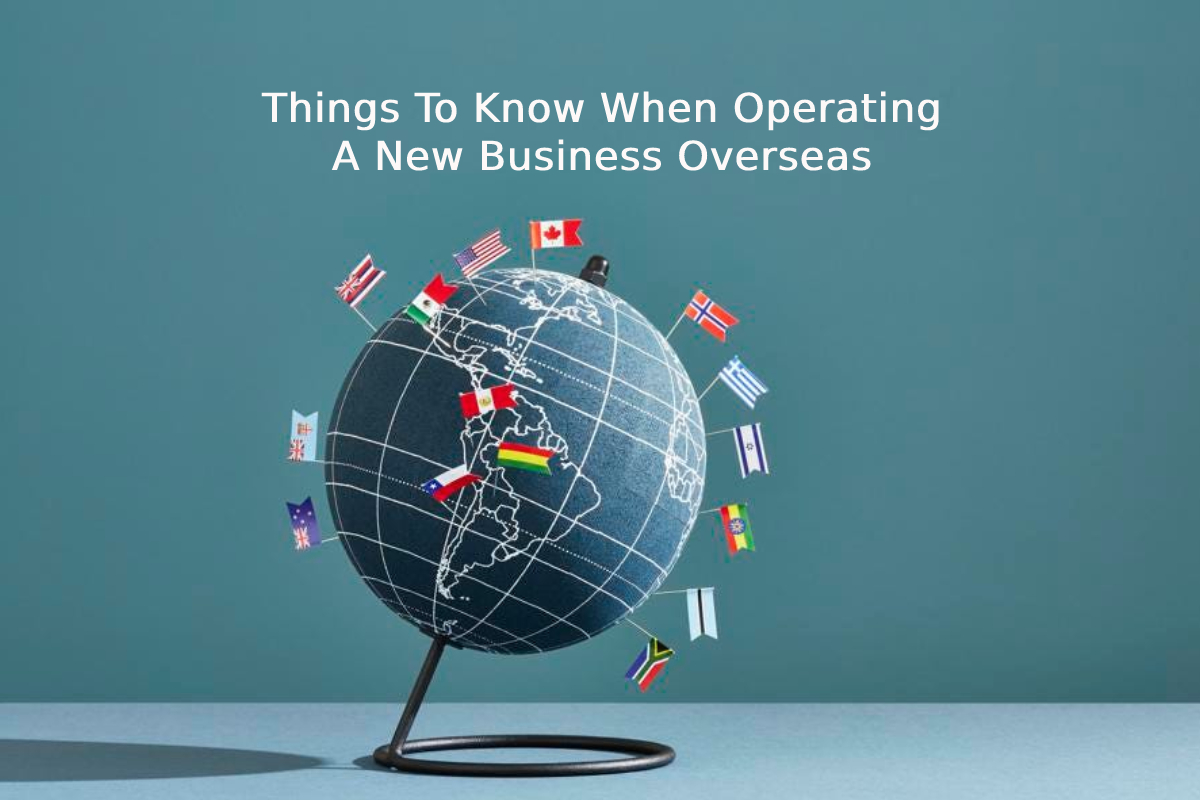
Operating A New Business Overseas

Many people have dreamed about living in another country. Instead of taking a holiday, you may relocate to another country and make a new life there. One of the finest methods to start a business overseas and settle there. Most people who want to establish a new business in another country are concerned about their chances of success.

Establishing a new business overseas can be emotionally and financially gratifying, provided you research, set realistic goals for yourself, and avoid or account for the inevitable challenges of every new enterprise. All new ventures are risky.

Nearly 50 % of new businesses overseas end up as failures within 4 years, and one in every four businesses fail within the first year in the United States, arguably one of the friendliest environments in the world for entrepreneurs.

Image:https://montereypremier.com/wp-content/uploads/2021/01/plane-841441_1920-980×651.jpg

Operating A New Business Overseas

This article will inspire you and reassure you that doing business overseas is still doable. The important things you need include a customer base for your products, and you must strictly follow the rules of the local government. Once everything is in place, you may fly to any country you like and start your business there.

Furthermore, if you do not plan to relocate permanently, be mindful that you will sometimes be far from your workplace or home. Let’s look at some important things you need to know about starting a new business overseas.

  • Choose The Right Country

You must be certain about where you wish to establish your company before traveling and starting your business overseas. Several things will determine your final destination. The environment of the area can have a significant impact on how you handle the move. For example, moving from a tropical climate to a cooler one can be a difficult transition, and it may take some time to adjust.

Before moving your money there, you should study the country’s economic and political stability. You can’t start a business in a region where you can’t sleep soundly or where you’re not certain if the product’s value will drop, and you’ll lose money.

Image:https://assets.entrepreneur.com/content/3×2/2000/1598470780-GettyImages-1148772285.jpg?auto=webp&quality=95&crop=16:9&width=675

choose The Right Country

  • Learn The Language And Culture 

You should anticipate constant interaction with the residents while starting a new business overseas. Whenever a new business is established, people living near it are always suspicious. They want to understand your company strategy, how you treat them, and how you view their lifestyle. Nobody likes to give up their traditions and culture, as you probably already know.

Try to learn the local language because it makes blending in with the community and communicating with others easier, which improves your customer service. When you eventually settle down, the language will start to creep in. As a result, your business strategy should not go against the people’s traditions in the country where you intend to settle.

  • Market Evaluation Is Essential

When launching a business in a foreign country, market research is critical. You should be aware of two things while you conduct your research. First and foremost, you must identify your target customer and what they desire. You should be aware of people’s preferences, the elements they evaluate when purchasing different products, and the ones that lead them to other businesses. You’ll also want to understand a little bit about your rivals.

You should also be aware of the previous product performance you plan to introduce. Knowing how other traders in your industry have performed can help you assess the growth prospects of any capital funding in the area. If your rivals have grown, you could invest a good amount of money in the market and acquire clients.

  • Make Your Business Legal

Every country has its own set of rules for conducting business. Registering is the first step when you begin your firm in a foreign country. For your convenience, you should also register trademarks later. Learn about business registration and licensing criteria, as these may be supplied separately in some areas.

Image:https://media.smallbiztrends.com/2013/12/Legal-checklistEdit.jpg

You may require a local business permit to conduct small enterprises and operations such as retail stores and supermarkets. You will, however, need to register as a company if you are in the manufacturing, assembly, or supply business. To finish the registration procedure, you can hire an attorney or go to a licensed company formation agent.

  • Create A Website

Digital marketing is important for all types of businesses today. As a company, you would like to reach out to more people locally, across states, and internationally. Different marketing methods are necessary, but you must use social networking sites, content marketing, and PPC to attract more customers digitally. It would be beneficial if you did not overlook SEO and long-term customer flow.

Digital marketing, on the other hand, has something in common with all other forms of marketing. Customers interested in your projects must click on a link or a button to learn more about your company and items. As a result, you must have a website where customers can learn more about your company and connect with it. Ensure that your contact information is on your company website and make it mobile-friendly.

  • Build Trust

The trust factor is the most important in any business. When you create a new site, it is important to build a trust factor so the customers will return to your website. You can get the trust factor with an SSL certificate.

For business, use Comodo SSL for multiple domains and subdomains because it secures both under single protection. Also provides the highest validation and makes your website trustworthy; it wins customers’ trust over the website.

Yes, the SSL Certificate will not only secure your domain. If the site has numerous domains and subdomains, then a reliable multi domain like Comodo SSL for a multi domain SSL certificate is essential.

  • Build Connections

In every element of our lives, relationships are crucial. To ensure that your businesses run effectively, you must work with people familiar with the environment and the criteria you must meet. When you decide to relocate to another country, you should contact firms and individuals who can assist you in getting started.

Image:https://www.internationalcitizens.com/wp-content/uploads/2018/10/How-to-Start-a-Business-as-An-Expat.jpg

Build Connections

Relationships can help in creating long-term trust between you and your connections. Your network may help you in various ways throughout your organization and provide any aid you may require during difficult times. It would be beneficial if you did not overlook your competition, as they are critical to your company’s success.

  • Begin With Freelancers

When starting a business in a foreign country, one of the most common concerns is how to manage personnel. How will you pay your employees? In a foreign country, what terminology do you require? What about insurance and taxes? These things could take up much of your time, money, and mental energy.

Managing personnel has never been simple and is unlikely to become so soon. As a small venture, you should consider running your company without having formal on-site employees. The workforce may not be required in the early phases of a business until a customer base has been established. As a result, hiring freelancers for certain jobs and paying them daily or hourly is preferable.

Wrapping Up 

It is also your responsibility to ensure that the personal information of the users visiting your site is safe and protected. Experts recommend installing an SSL certificate on your website can improve customer trust.

Continue Reading

Business

Level Up Your Business with Vinyl Banners

Level Up Your Business with Vinyl Banners

If you have never used a banner to showcase your business, you may miss out on the significance of signage. The truth is that every business, whether big or small can rely on banners to pick steam. One of the most significant aspects of choosing a vinyl banner is that it offers you a rather inexpensive of letting the customers know about the existing products and services.

The custom banners look professional and make a bold statement at a nominal rate. So, if you are ready to make an impact, the custom vinyl banners may provide you with a host of opportunities to make a mark. The advertisement requirements of a business keeps on changing based on the seasons, so you need to know how to customize the banner to meet your needs.

Reasons to rely on vinyl banners:

The vinyl banners present the most effective mode of advertising. It is lightweight and highly durable for businesses. If you know how to use the banner, here are the reasons to install them.

  • Quick solution for visibility

When it comes to using a vinyl banner, you need to customize each aspect to make it more brand-friendly and easily reaches the customers. The customized banners are visible from a distance as you must have customized the size preferences based on where to hang it appropriately. If you are planning to hang the banner, it is necessary to check whether it comes with pole pockets, hem, or grommets for hanging.

  • Durable banner

A banner needs to combat with the weather elements when you hang it outside and it is preferably used on the window frames and wall covering. The vinyl banner is known for its durability and it is highly affordable. You can get a banner in the desired shapes and colors and make it last through the elements. With a custom vinyl banner, the list of benefits goes on and meets the expectations of customers.

  • Customization options

One of the best things to note about a vinyl banner is its options of customization. Whether it is to include the desired shades, prints, and designs, you have your hands full and make yourself know among the existing customers, prospects, and the customers. However, be sure to invest in high-quality and a full-color vinyl banner that a solid statement to let the customers know your intentions.

  • Aesthetic effect

Does the vinyl banner convey information and create an impression? Apart from the intended reasons to install a vinyl banner, you need to know how aesthetically pleasing it is for the viewers. Whether it is the print or the photographic quality of the images, you can get everything with ease. The images and colors to include in the banner is endless making it one of the most preferred options.

The final word:

The significant benefit of a vinyl banner is that it offers adequate space for customization based on your needs. Whether it is the size, design, and color, you need to stand out among the competitors. Moreover, it conveys a statement and draws the attention of the customers with its fantastic versatility.

Continue Reading

Trending