Business
Benefits of Using Security Cameras in Your Business
In today’s world, security has become an essential aspect of running any business, whether small or large. The growing concern about crime, theft, vandalism, and internal threats has led to the widespread adoption of security cameras. They not only serve as a deterrent but also provide invaluable benefits that contribute to the smooth and safe operation of a business. In this comprehensive article, we will explore the multifaceted advantages of using security cameras in your business, discussing everything from enhancing safety to improving operational efficiency and protecting your assets.
1. Crime Prevention and Deterrence
The primary benefit of security cameras in any business is crime prevention. The mere presence of surveillance cameras acts as a significant deterrent to criminal activity. Criminals are less likely to target a business that has visible security measures in place, as they fear getting caught on camera. This is especially true for businesses that deal with cash, high-value items, or sensitive data.
In addition to preventing external threats like burglary or theft, security cameras also help reduce internal theft and fraud. Employees, knowing that they are being monitored, are less likely to steal products or misappropriate company funds. The deterrence factor is particularly important in industries like retail, hospitality, and manufacturing, where there is constant interaction with employees and customers.
2. Enhanced Employee Safety
Security cameras not only protect your business assets but also play a crucial role in ensuring the safety of your employees. Workplace violence, harassment, and other safety concerns can be minimized through the use of surveillance cameras. In high-risk environments or places with a history of altercations, cameras can help mitigate the risk of violent incidents.
Additionally, in case of an accident or emergency, security cameras can provide valuable footage that can be used to investigate the situation. This can help in understanding what happened, identifying any potential hazards, and ensuring that workers are adhering to safety protocols. Furthermore, if an incident involves a customer or an outsider, having footage of the event can protect your employees from false accusations or legal repercussions.
3. Evidence Collection and Legal Protection
In the unfortunate event that a crime or dispute occurs, having security camera footage can be a game-changer in providing concrete evidence. Video surveillance can be used in courtrooms to support or disprove claims made by employees, customers, or third parties. Whether it’s a theft, a traffic accident in the parking lot, or an injury claim, security camera footage can be vital for legal purposes.
For businesses, this legal protection is essential, as it can save time and money in resolving disputes. In some cases, security footage has been crucial in settling insurance claims quickly and fairly. Without such evidence, businesses might struggle to prove their side of the story, leading to prolonged investigations or financial loss.
4. Remote Monitoring and Control
Modern security systems offer the advantage of remote monitoring. This means that business owners or security personnel can monitor the premises from anywhere in the world, using a smartphone, tablet, or computer. This feature is especially beneficial for businesses that operate across multiple locations or have a high level of foot traffic.
With remote access, business owners can oversee their property and ensure that everything is functioning as it should. For instance, if an alarm is triggered or if suspicious activity is noticed on a camera feed, the business owner can take immediate action, such as contacting authorities or alerting security staff. Remote monitoring allows business owners to have peace of mind, knowing that their property is being monitored even when they are not physically present.
5. Reduced Insurance Premiums
Insurance companies recognize the value of security cameras in reducing the risk of damage, theft, and liability claims. As a result, many businesses that install security systems qualify for lower insurance premiums. Insurance providers typically offer discounts to businesses that take proactive steps to protect their assets, and the presence of security cameras is a key factor in this assessment.
The reduction in premiums can offset the cost of installing and maintaining a security camera system, making it a cost-effective investment. Over time, the savings on insurance premiums can be significant, especially for businesses in high-risk industries.
6. Improved Customer and Visitor Experience
Security cameras not only provide safety and protection but can also improve the overall experience for customers and visitors. For example, in retail environments, security cameras help reduce the chances of theft or vandalism, ensuring that customers feel safe while shopping. When customers feel safe, they are more likely to return and recommend the business to others.
Cameras can also be used to monitor the flow of customers, helping businesses understand peak hours and adjust staffing or services accordingly. Additionally, the presence of security cameras can make customers feel more comfortable, knowing that their safety and well-being are prioritized. This is particularly important for businesses in industries such as banking, healthcare, and hospitality, where clients or customers expect a high level of security.
7. Operational Efficiency and Business Insights
Modern security camera systems offer more than just surveillance; they also provide valuable insights into business operations. Cameras can be used to monitor employee productivity, customer behavior, and store traffic patterns. For example, by reviewing footage, a business owner can identify bottlenecks in the store or areas where employees are not adhering to proper procedures.
In retail businesses, cameras can provide valuable data about which sections of the store attract the most attention and where customers tend to linger. This information can help in optimizing store layouts, improving product placement, and increasing sales. Additionally, video analytics tools can identify trends or patterns, enabling businesses to make data-driven decisions that enhance operational efficiency.
8. Internal Theft Prevention
Employee theft is a significant concern for many businesses. According to various studies, a large percentage of theft and fraud incidents in businesses come from internal sources, including employees and contractors. Security cameras act as a powerful tool in preventing and detecting internal theft. By monitoring inventory areas, cash registers, and employee workspaces, businesses can minimize the risk of dishonest behavior.
When employees are aware that they are being monitored, they are less likely to engage in theft or other unethical practices. In the event of theft, security footage can help identify the culprit, leading to faster resolutions. Moreover, the ability to review footage for specific incidents can help employers investigate discrepancies in inventory or financial records and take corrective action.
9. 24/7 Surveillance
Unlike traditional security measures, security cameras offer around-the-clock surveillance. This means that your business is continuously monitored, even outside of regular business hours. This is particularly important for businesses that operate late at night or have high-value assets that need protection during off-hours.
For instance, if a business operates 24/7, security cameras provide consistent monitoring to protect against break-ins, vandalism, and other risks that may occur when the business is closed. Even if your business operates during the day, having cameras allows for continuous monitoring during the night, ensuring that your property is safeguarded at all times.
10. Protection of Business Assets
Security cameras play an essential role in protecting business assets, both tangible and intangible. Whether it’s safeguarding expensive equipment, inventory, or proprietary information, surveillance systems act as a crucial layer of defense. Cameras can help prevent theft, monitor access to sensitive areas, and ensure that valuable assets are properly secured.
For businesses that store physical products, cameras in warehouses and storage rooms provide an added layer of protection against theft or damage. For tech companies or businesses dealing with intellectual property, cameras can prevent unauthorized access to sensitive documents or data. By securing these assets, businesses can avoid significant financial losses and maintain a competitive advantage.
11. Monitoring Parking Areas and Perimeter Security
For businesses with large premises or parking lots, security cameras are an essential tool in monitoring the perimeter. Parking lots and exterior areas are common targets for vandalism, theft, and accidents. By installing cameras in these areas, business owners can ensure that the surrounding property is protected and that any incidents are captured on video.
In addition, cameras in parking areas can provide added safety for employees and customers, reducing the likelihood of criminal activity and ensuring that people feel secure when arriving or leaving the premises. The presence of cameras can also help monitor traffic flow and prevent accidents, creating a safer environment for everyone.
12. Easy Integration with Other Security Systems
Modern security camera systems are designed to integrate seamlessly with other security technologies, such as alarm systems, access control systems, and motion detectors. This creates a comprehensive security network that offers multiple layers of protection.
For example, if a camera detects unusual activity, it can trigger an alarm or alert security personnel. Additionally, security cameras can be linked with access control systems, allowing business owners to monitor who enters and exits specific areas. By integrating cameras with other security measures, businesses can create a cohesive, well-rounded approach to safeguarding their property.
13. Peace of Mind
Ultimately, the use of security cameras in business provides peace of mind. Knowing that your property, employees, and customers are being monitored gives you confidence that your business is protected. Security cameras allow you to focus on running your business without constantly worrying about potential risks.
Peace of mind is an invaluable benefit for business owners. Whether it’s being able to monitor the property remotely or knowing that your premises are under constant surveillance, security cameras provide an added layer of comfort and assurance that your business is safe.
Conclusion
Security cameras are an essential component of modern business security. The benefits they provide go far beyond simple surveillance. They help prevent crime, protect employees and customers, provide evidence for legal purposes, and improve operational efficiency. With advancements in technology, modern security systems offer a wide range of features, including remote monitoring, integration with other security systems, and data analytics.
Investing in security cameras is not just about safeguarding your business from external threats; it’s about creating a secure environment for your employees, customers, and assets. The peace of mind that comes with knowing your business is protected around the clock is invaluable. By implementing a comprehensive security camera system, you are not only protecting your property but also fostering a safer and more efficient work environment.
In an increasingly unpredictable world, security cameras are an investment that every business, regardless of size or industry, should consider.
You may like
Business
How Can an Operational Excellence Program Improve Business Performance and Efficiency?

Modern-day companies find themselves operating within a world characterized by changing customer demands, technology, competition, and workforce requirements. For any company to be able to remain effective in its operations, there must be much more to it than good products or services. Efficient processes, competent teams, sound decision making, and a culture for continual improvement become vital.
Operational excellence focuses on improving the way an organization works across different functions. It helps businesses identify unnecessary complexity, strengthen processes, use resources effectively, and create greater value for customers. An Operational Excellence program can help professionals understand these areas from a broader business perspective and develop the capabilities required to lead meaningful improvements.
For professionals who want to strengthen their knowledge of process improvement, operations, leadership, and business transformation, an Operational Excellence course can also provide a structured approach to developing these skills.
Understanding Operational Excellence in Business
The concept of operational excellence does not involve merely accomplishing activities quickly. It involves designing processes which are simple, consistent, efficient, and goal-oriented.
Every organization operates in a manner where there are various interconnected processes. In situations where the communication process is not clear or the process becomes too complicated, the staff ends up using valuable time solving problems that do not really matter in the business.
Operational excellence inspires companies to look at how tasks are performed and see if there might be a better way of doing things. It fosters a culture of continuous improvement rather than waiting until a major problem happens before addressing it.
Improving Business Performance Through Better Processes
Well-designed procedures are a vital aspect of good business performance. The more that employees are aware of their duties and the workflows are well-defined, the better for the team to work.
It is through operational excellence that businesses are able to look at their operations and discover where there might be inefficiencies.
A stronger approach to operations can help businesses:
- Build clearer and more consistent workflows
- Improve coordination between teams and business functions
- Use available resources more thoughtfully
- Align operational activities with broader business objectives
These changes may make it possible to have a situation where teams become more clear about what is expected of them. Instead of always implementing temporary solutions to issues that arise, organizations will take a step back and try to understand the process behind it.
Creating Greater Efficiency Across the Organization
Efficiency is one of the key objectives of operational excellence. But, the concept of efficiency must not be seen as a mere reduction of resource utilization or an increase in the workload of employees.
Efficiency arises out of the simplification of work and giving it meaning. Employees should have an opportunity to direct their energy toward business-value adding activities rather than wasting time on complex procedures.
Efficiency in operations also pushes organizations to think about the relationship between functions. An efficient process from the perspective of one department could be a problem for another department. Examining the entire process allows the managers to appreciate the relationships and make decisions beneficial to the organization as a whole.
This broader perspective can support smoother operations while helping teams respond more effectively to changing business needs.
Supporting Better Decision Making
Good business performance is contingent on making the right decisions. Decision-making in organizations entails making decisions regarding business operations, resource allocation, clients, technology, personnel and other future considerations.
Operational Excellence allows managers to be decision makers with knowledge of how processes within their organization work and their results. Instead of reacting to situations that arise, management will look at what causes these situations to arise and what should be changed.
This methodology facilitates better decision making. This strategy can help organizations open up the lines of communication when it comes to any operational issues that may be present.
Encouraging a Culture of Continuous Improvement
Operational excellence program is most effective once it has been ingrained into the organizational culture. Sustainable improvement cannot solely rely on top-level executives. All employees from different departments should be free to bring forward issues and propose improvements.
The culture of continuous improvement ensures that employees stay curious as to how their work could improve. It also gives managers a chance to hear from those who deal with processes on a daily basis.
Leadership is crucial in the creation of such a culture. Leaders should be able to communicate priorities effectively, foster collaboration, and create a climate where improvement is the collective responsibility of everyone.
Understanding the reason for implementing operational change will ensure that employees participate in the process of improvement in a constructive manner.
Strengthening Leadership and Operational Capabilities
Operational excellence requires a combination of technical knowledge and good leadership. Process improvement may require the reallocation of duties, technological changes, workflow changes, or getting people to work differently.
This implies that professionals must have skills which surpass mere process skills. Communication, problem solving, strategic thinking, change management, and collaboration all play roles in improving operations.
Operational learning will assist practitioners in understanding how these skills interrelate. It will equip managers with knowledge on how to analyze problems of operations from a wider business perspective while taking into account the implications of their decision-making on their people and other stakeholders.
Connecting Technology With Operational Excellence
Tools such as digital technologies, automation, data analysis, and artificial intelligence have transformed organizational operational management. Nevertheless, technology adoption does not necessarily lead to operational excellence.
Firstly, companies need to analyze their procedures and identify areas where technology can bring some improvements. An implementation of a flawed procedure without analyzing its design could just mean that the problem would persist but in another way.
Operational excellence aids in linking technological choices with real business needs. It ensures that any form of digital transformation is geared towards enhancing processes, enabling people, sound decision-making, and better customer experience.
Conclusion
Operational excellence will enable the company to develop an increased connection between the human, process, technological, and strategic dimensions of the firm. Through better process design and decision-making, as well as a culture of continuous improvement, operational excellence can be achieved.
It is important to point out that operational excellence is beneficial not only for process improvements. Operational excellence helps managers and employees to think critically about the value creation process and further development of business processes.
In conclusion, operational excellence is all about creating an organization that operates in a clearer, more consistent, and focused manner. Organizations that embrace continuous improvement in their operations become more agile, efficient, and better positioned for future challenges.
Business
Things To Know When Operating A New Business Overseas
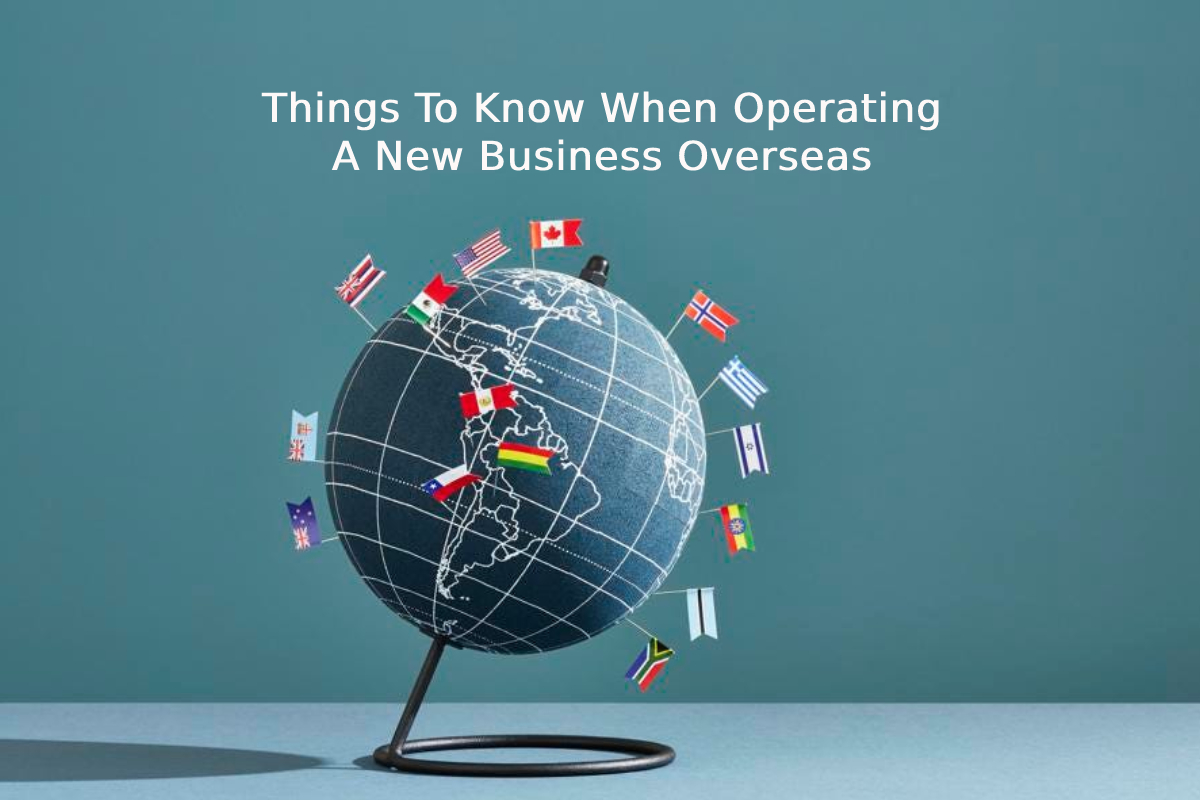
Many people have dreamed about living in another country. Instead of taking a holiday, you may relocate to another country and make a new life there. One of the finest methods to start a business overseas and settle there. Most people who want to establish a new business in another country are concerned about their chances of success.
Establishing a new business overseas can be emotionally and financially gratifying, provided you research, set realistic goals for yourself, and avoid or account for the inevitable challenges of every new enterprise. All new ventures are risky.
Nearly 50 % of new businesses overseas end up as failures within 4 years, and one in every four businesses fail within the first year in the United States, arguably one of the friendliest environments in the world for entrepreneurs.
Image:https://montereypremier.com/wp-content/uploads/2021/01/plane-841441_1920-980×651.jpg

This article will inspire you and reassure you that doing business overseas is still doable. The important things you need include a customer base for your products, and you must strictly follow the rules of the local government. Once everything is in place, you may fly to any country you like and start your business there.
Furthermore, if you do not plan to relocate permanently, be mindful that you will sometimes be far from your workplace or home. Let’s look at some important things you need to know about starting a new business overseas.
-
Choose The Right Country
You must be certain about where you wish to establish your company before traveling and starting your business overseas. Several things will determine your final destination. The environment of the area can have a significant impact on how you handle the move. For example, moving from a tropical climate to a cooler one can be a difficult transition, and it may take some time to adjust.
Before moving your money there, you should study the country’s economic and political stability. You can’t start a business in a region where you can’t sleep soundly or where you’re not certain if the product’s value will drop, and you’ll lose money.
Image:https://assets.entrepreneur.com/content/3×2/2000/1598470780-GettyImages-1148772285.jpg?auto=webp&quality=95&crop=16:9&width=675

-
Learn The Language And Culture
You should anticipate constant interaction with the residents while starting a new business overseas. Whenever a new business is established, people living near it are always suspicious. They want to understand your company strategy, how you treat them, and how you view their lifestyle. Nobody likes to give up their traditions and culture, as you probably already know.
Try to learn the local language because it makes blending in with the community and communicating with others easier, which improves your customer service. When you eventually settle down, the language will start to creep in. As a result, your business strategy should not go against the people’s traditions in the country where you intend to settle.
-
Market Evaluation Is Essential
When launching a business in a foreign country, market research is critical. You should be aware of two things while you conduct your research. First and foremost, you must identify your target customer and what they desire. You should be aware of people’s preferences, the elements they evaluate when purchasing different products, and the ones that lead them to other businesses. You’ll also want to understand a little bit about your rivals.
You should also be aware of the previous product performance you plan to introduce. Knowing how other traders in your industry have performed can help you assess the growth prospects of any capital funding in the area. If your rivals have grown, you could invest a good amount of money in the market and acquire clients.
-
Make Your Business Legal
Every country has its own set of rules for conducting business. Registering is the first step when you begin your firm in a foreign country. For your convenience, you should also register trademarks later. Learn about business registration and licensing criteria, as these may be supplied separately in some areas.
Image:https://media.smallbiztrends.com/2013/12/Legal-checklistEdit.jpg

You may require a local business permit to conduct small enterprises and operations such as retail stores and supermarkets. You will, however, need to register as a company if you are in the manufacturing, assembly, or supply business. To finish the registration procedure, you can hire an attorney or go to a licensed company formation agent.
-
Create A Website
Digital marketing is important for all types of businesses today. As a company, you would like to reach out to more people locally, across states, and internationally. Different marketing methods are necessary, but you must use social networking sites, content marketing, and PPC to attract more customers digitally. It would be beneficial if you did not overlook SEO and long-term customer flow.
Digital marketing, on the other hand, has something in common with all other forms of marketing. Customers interested in your projects must click on a link or a button to learn more about your company and items. As a result, you must have a website where customers can learn more about your company and connect with it. Ensure that your contact information is on your company website and make it mobile-friendly.
-
Build Trust
The trust factor is the most important in any business. When you create a new site, it is important to build a trust factor so the customers will return to your website. You can get the trust factor with an SSL certificate.
For business, use Comodo SSL for multiple domains and subdomains because it secures both under single protection. Also provides the highest validation and makes your website trustworthy; it wins customers’ trust over the website.
Yes, the SSL Certificate will not only secure your domain. If the site has numerous domains and subdomains, then a reliable multi domain like Comodo SSL for a multi domain SSL certificate is essential.
-
Build Connections
In every element of our lives, relationships are crucial. To ensure that your businesses run effectively, you must work with people familiar with the environment and the criteria you must meet. When you decide to relocate to another country, you should contact firms and individuals who can assist you in getting started.
Image:https://www.internationalcitizens.com/wp-content/uploads/2018/10/How-to-Start-a-Business-as-An-Expat.jpg

Relationships can help in creating long-term trust between you and your connections. Your network may help you in various ways throughout your organization and provide any aid you may require during difficult times. It would be beneficial if you did not overlook your competition, as they are critical to your company’s success.
-
Begin With Freelancers
When starting a business in a foreign country, one of the most common concerns is how to manage personnel. How will you pay your employees? In a foreign country, what terminology do you require? What about insurance and taxes? These things could take up much of your time, money, and mental energy.
Managing personnel has never been simple and is unlikely to become so soon. As a small venture, you should consider running your company without having formal on-site employees. The workforce may not be required in the early phases of a business until a customer base has been established. As a result, hiring freelancers for certain jobs and paying them daily or hourly is preferable.
Wrapping Up
It is also your responsibility to ensure that the personal information of the users visiting your site is safe and protected. Experts recommend installing an SSL certificate on your website can improve customer trust.
Business
Level Up Your Business with Vinyl Banners

If you have never used a banner to showcase your business, you may miss out on the significance of signage. The truth is that every business, whether big or small can rely on banners to pick steam. One of the most significant aspects of choosing a vinyl banner is that it offers you a rather inexpensive of letting the customers know about the existing products and services.
The custom banners look professional and make a bold statement at a nominal rate. So, if you are ready to make an impact, the custom vinyl banners may provide you with a host of opportunities to make a mark. The advertisement requirements of a business keeps on changing based on the seasons, so you need to know how to customize the banner to meet your needs.
Reasons to rely on vinyl banners:
The vinyl banners present the most effective mode of advertising. It is lightweight and highly durable for businesses. If you know how to use the banner, here are the reasons to install them.
-
Quick solution for visibility
When it comes to using a vinyl banner, you need to customize each aspect to make it more brand-friendly and easily reaches the customers. The customized banners are visible from a distance as you must have customized the size preferences based on where to hang it appropriately. If you are planning to hang the banner, it is necessary to check whether it comes with pole pockets, hem, or grommets for hanging.
-
Durable banner
A banner needs to combat with the weather elements when you hang it outside and it is preferably used on the window frames and wall covering. The vinyl banner is known for its durability and it is highly affordable. You can get a banner in the desired shapes and colors and make it last through the elements. With a custom vinyl banner, the list of benefits goes on and meets the expectations of customers.
-
Customization options
One of the best things to note about a vinyl banner is its options of customization. Whether it is to include the desired shades, prints, and designs, you have your hands full and make yourself know among the existing customers, prospects, and the customers. However, be sure to invest in high-quality and a full-color vinyl banner that a solid statement to let the customers know your intentions.
-
Aesthetic effect
Does the vinyl banner convey information and create an impression? Apart from the intended reasons to install a vinyl banner, you need to know how aesthetically pleasing it is for the viewers. Whether it is the print or the photographic quality of the images, you can get everything with ease. The images and colors to include in the banner is endless making it one of the most preferred options.
The final word:
The significant benefit of a vinyl banner is that it offers adequate space for customization based on your needs. Whether it is the size, design, and color, you need to stand out among the competitors. Moreover, it conveys a statement and draws the attention of the customers with its fantastic versatility.
How Can an Operational Excellence Program Improve Business Performance and Efficiency?
Things To Know When Operating A New Business Overseas
5 Pros And Cons Of Buying Computer Parts Online
Explore New Dimensions of Advertising with Custom Poster For Marketing Campaigns
How to Choose the Best VPS Hosting?
5 Tips to Choose the Right Prosthetic Hand for Yourself
All You Need to Know for Starting a Career as an AWS DevOps Engineer
Mobile App Performance Testing – Challenges
Pros and Cons of Digital Marketing