Connect with us

Miscellaneous

The Evolution of Web design

Published

on

web design

Web design has become a pretty significant factor in the success of a website which further affects the overall growth of a business, irrespective of the scale of the business. But what you are used to seeing today wasn’t always like this. Web design has come a long way ever since the first websites were developed way back in the early 1990s.

The approach of web design agencies of today has changed drastically when we compare them to the retro world. Sites back in the time were solely based on text and there were only a couple of images along with no layout at all other than some headings and paragraphs.

This blog will focus on how web design has evolved throughout the years and what has changed now.

Let us begin.

Most of the people born after 1999 might think that the World Wide Web has been a part of our lives since forever but that isn’t the case. This is why the internet is considered young, something that is continuously growing and reinventing itself.

The world’s first-ever live website came into the picture thirty years ago, that is, in 1991. The concept was first proposed by the famous British scientist Tim Berners-Lee in 1989. 2 years later, the attempt to develop a management system that is capable of linking different documents together with the use of hyperlinks without having to sign into multiple machines along with being able to learn new programs came to life and the first-ever live website went online.

Don’t get your hopes high as the first couple of websites were text-based and users needed a text-based browser to view them correctly. The World Wide Web was initially named Nexus. In the year of 1993, in came a website by the name of Mosaic where users were able to see both text and images displayed together on the screen.

Fast forward to the mid-nineties, Internet Explorer and Netscape were in contention for being the best browsers on the internet. The launch of these websites simply meant one thing. The aesthetic part of websites was beginning to develop, something that can attract a more general audience.

The experimentation led to web-safe colors and fonts becoming a common thing. Amidst all this, JavaScript was launched which made the concept of dynamic content and animation a possibility. Most people do not give enough credit to the retro world as without all these experimentations, web design wouldn’t have developed to this extent.

During the late 90s, designers started to remove all the inconsistencies such as tricky page structure and dull colors. Websites now came out with more order and better structure when it came to designing. Although one can still find designs in some of the conventional quarters.

Designers began to realize the significance of putting the focus on navigational structure, which further led to menus, sitemaps, and navigation options.

Fast forward to 2010, the beginning of a new decade. This new beginning saw a massive increase in the purchase of mobile phones which drastically changed the process of web design, both aesthetically and functionally.

Four years later, responsive websites took over. If a website wasn’t compatible with a mobile screen, traffic would decrease. Mobile browsing simply meant that scrolling would force designers to a more simplistic design.

On top of that, the introduction of retina displays also influenced the design process on a large scale. Images now needed to be more than 1.5 to 2 times larger than the normal size for users to see them. Later on, designers found out that using CSS to reduce the screen size helped in making the images clear and vibrant.

With time, responsive websites took over and responsive web design became the new normal as more than 5 billion users in the world access the services of the internet via their mobile phones. With the introduction of HTML5 and CSS3, designers are now able to produce high-quality animations and effects.

As we all know the dynamics kept changing over the years and now the focus has shifted to lead-driven web design, which is, in general terms, a data-focused approach to web design. This lead-driven technology is based on strategic tweaking instead of a complete overhaul.

This is how the journey has been for web design over the years. Arguably, lead-driven web design is the future and it is safe to say that a web design agency, irrespective of the location will continue to evolve based on the ever-changing dynamics in the world of web design.

Miscellaneous

How Can You Make Your Office Presentations Clear and More Engaging?

Published

on

By

How Can You Make Your Office Presentations Clear and More Engaging

A workplace is full of different roles, different levels of understanding, and different expectations. All employees do not have the same IQ level; some are sharp at adopting, while some need more time to learn about new skills or strategies. Therefore, you need to present everything in a simple and smooth way.

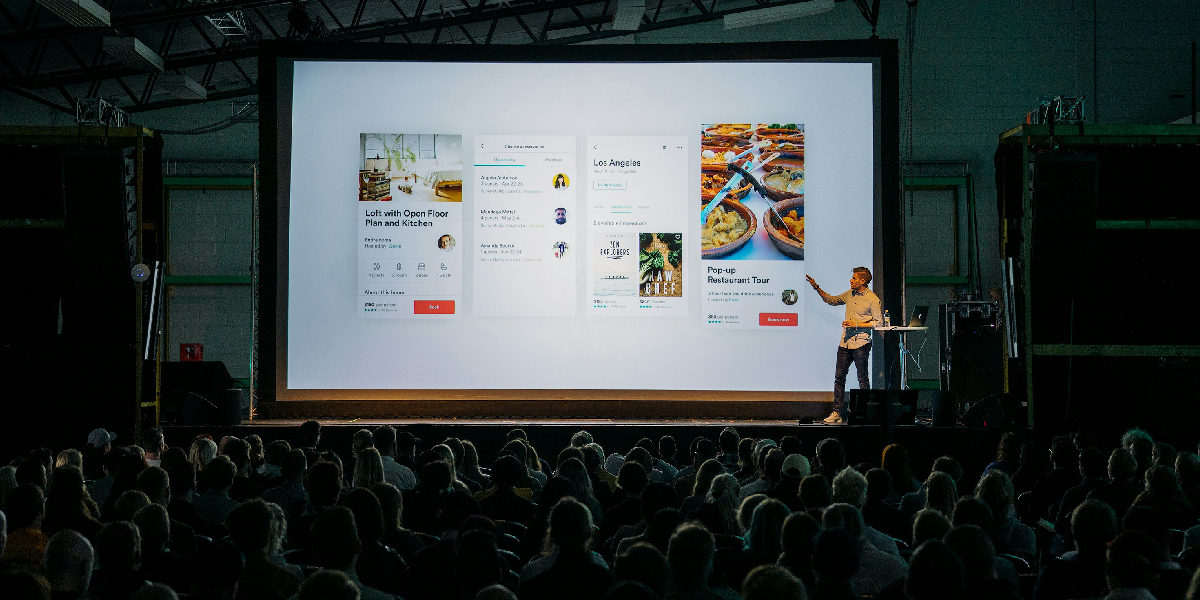
A presentation is the best way to deliver your message or discuss ideas and new projects with your business partners, team, and stakeholders. However, rushing this process, speaking too fast, having unclear ideas, and messy slides can make it boring, wasting your effort and time.

In this article, we will discuss some effective ideas to help you make your office presentation clear and engaging.

Ensure Visibility

Making sure everyone in the room can clearly see your content is one of the first steps to an effective presentation. Adjust the lighting, font size, and color contrast, use a reliable short-throw projector, and place it in a position where everyone has a clear line of sight. Double-check everything before you start. It will keep your audience attentive and help your ideas reach everyone without confusion.

Organize Your Ideas

Always start by thinking about what message should come first. Arrange your points so each one leads into the next, forming a smooth path from introduction to conclusion. It helps you speak confidently, and your audience feels guided rather than forced to follow random points, which makes your overall delivery more professional and easier to understand.

Use Simple Everyday Language

Speaking in a clear, uncomplicated manner helps your audience follow you easily. Avoid jargon or long, twisting sentences; use simple, everyday language. It will help you sound more approachable and relatable, which makes your points land better. It builds a comfortable atmosphere, encouraging people to stay focused.

Keep Slides Clean and Minimal

The main purpose of slides is to show your idea in 2-3 points, so avoid filling them with paragraphs of text or multiple charts on one page. Keep each slide focused on one idea with only the necessary information, making it easier for your audience to follow along without distraction. Use whitespace wisely and highlight key points with simple colors or shapes.

Support Your Points With Visuals

Images, charts, and diagrams can make complex ideas easier to understand, as they explain faster than words alone. It will strengthen their understanding and keep them engaged. Make sure the visuals are clear, relevant, and easy to read because too many unnecessary images can be distracting. When used well, they act like a guide, helping people remember your points long after the presentation ends.

Maintain a Steady Speaking Pace

Talking too fast can confuse listeners, while speaking too slowly can bore them. A steady pace ensures your audience has time to process what you are saying. It also gives you a chance to breathe and stay calm. Adjust your speed depending on the audience’s reactions, and make pauses at key points to allow your ideas to sink in. It will make your presentation feel smooth and professional.

Connect With Your Audience Through Eye Contact

Looking at your audience while speaking creates a sense of engagement. It signals that you value their attention and want them to follow along. Additionally, it also allows you to notice reactions, such as confusion or interest, so you can adjust your explanations. This small action strengthens the connection between you and your listeners, making them feel included and respond positively to your message.

Use Relatable Examples

Sharing examples people can relate to makes your ideas easier to understand. Make sure to choose examples that are simple, realistic, and connected to everyday experiences. It helps people see how your points matter in their own work or daily tasks, making your presentation more interesting and memorable.

Invite Audience Interaction

Asking questions or encouraging small discussions can help you break the monotony of listening and give people a moment to think and respond. When the audience participates, they feel like they are part of the presentation and also give you feedback on how well your message is landing, allowing you to clarify points if needed.

Bottom Line

Delivering a presentation is not just about making a speech. Its main purpose is to deliver your message clearly, keep the audience engaged, and encourage them to follow your ideas. Following the aforementioned strategies and relying on a reliable projector services provider, like  Christie, can help you make it smooth and productive.

Continue Reading

Miscellaneous

5 Gadgets You Need For An Outdoor Trip

Published

on

By

5 Gadgets You Need For An Outdoor Trip

Portable water filter:

Infections from water are very common and deadly and can spoil the entire trip. Fresh and clean water is not available everywhere, especially water in the hilly areas that are very detrimental to the stomach. In such a case carrying a portable water filter is very essential to stay healthy and enjoy a nice outing.

For any comprehensive trip in the mountains or forests or any place, a water filter is required for treatment and filtering out the germs. When choosing a water filter to carry in remote places, emphasis must be placed on its weight. A lightweight water filter should be selected as it has to be carried everywhere, though a heavier water filter is more durable, for convenience, a lightweight is preferred.

Then comes the ease of use. An easily operated water filter is always preferred as it saves time and can be operated by anyone.

Another important aspect in choosing a water filter is examining its potential for filtering and purifying viruses. In places where there are possibilities of contamination through animals, a powerful virus purifier should be carried.

So, for an extensive outing, a water filter that is compact, portable, ultralight, and affordable should be selected.

Camp stove

For a riveting camping experience, a camp stove is exemplary among every other thing. For overwhelming hiking, campfire or camp experience, a camp stove is inevitable. For carrying it from place to place, a lightweight camp stove is desired. Many pocket-size stoves which can be folded are also available.

But it should be hardy and resilient as it has to encounter many rugged environments. Camp stoves made of stainless steel can serve the purpose. It should also be equipped with strong and adjustable firepower, with a switch to control the firepower needed. It should have the ability to boil promptly.

To enjoy camping with friends in tents, for backpackers, or hikers a windproof, portable and water-resistant camp stove is ideal which should also be portable and lightweight as well as cost-effective. It is always better to opt for natural fuel like twigs, leaves rather than carrying fuel.

Head torch 

To expedite and explore through the forests, the head torch can be one of your reliable companions. Or if you are on a night walking spree or opted for mountaineering or trail running, a head torch can turn out to be your most crucial accessory.

For choosing a head torch that can serve all the motives, emphasis must be placed on lumens. Lumens measure the degree of brightness of the head torch. Brightness depends on the number. More the number, the more the brightness. Brightness does not imply

 the visibility of the wearer but also how you are seen by others.

Lumens also determine the battery life of the head torch. How long a battery lasts depends on the maximum number of lumens.

The maximum distance should also be taken into account. For nearer distance, a wider beam shape can do the job while for greater distance as in navigation a focused beam is required. Apart from it, weight, waterproofing

should also be considered.

Waterproof Speaker

Chilling out with friends remains incomplete without a portable waterproof speaker. Whether it is a day outing or a night one, a speaker sets the mood of the trip. Before buying a waterproof speaker, three things have to be checked, irrespective of the type of outing, these are sound, durability, and battery life.

To produce high-quality stereo sound, detailing should be done on the audio drivers. A premium quality product should have the ability to produce bass, stellar sonic sound for hours between charges.

While choosing battery life, the waterproof speaker should have the capacity to render sound for a minimum of 10 hours. This can ascertain that the device can entertain throughout the day.

Other features like built-in lights, charging capacity can also be checked before purchasing. The new generation waterproof speakers have changed massively and have become smarter and durable than the old models.

GPS enabled watch

For those who have a penchant for hiking, exploring, running, swimming, the GPS enabled watch becomes their foes. The simplest way to keep a track of your journey is with a GPS enabled watch. It will furnish you with all the essential information wherever you are, whether on the mountains, under the water or surfing on the waves.

The GPS enabled watches are of immense help to cyclists and hikers as they effectively provide all the information required to navigate in each turn. They are built-in with mapping apps which enables them to procure information accurately.

For exploring far distances GPS watches with long battery life or a solar-powered battery should be opted.

These watches come in various designs and sizes. Different straps are also available for different uses. For swimming or any water activities, faster drying rubber straps should be preferred while for trekking or similar activities leather straps or any breathable fabrics are recommended.

Continue Reading

Miscellaneous

What Is Experiential Learning Theory? Know Here!

Published

on

Experiential Learning Theory

“There are two goals in the experiential learning process. One is to learn the specifics of a particular subject, and the other is to learn about one’s own learning process.”

-David A. Kolb, Proponent of Experiential Learning Theory

Experiential learning, as the name suggests, refers to a way of learning by means of acquiring knowledge acquisition techniques from others’ learning experiences. In an online class, educators may adopt this method while teaching the pupils. By taking lessons from others’ experiences, the students’ information retention and memorization capabilities can be enhanced to a great extent.

Being a teacher, it is obvious that you would want to make yourself aware of the various influential learning theories that would help you create an optimal and effective class environment. Knowing about experiential learning theory is beneficial for people like you who belong to the profession of teaching.

In this blog, we will discuss the definition of experiential learning theory and explain the learning styles that form a part of it.

What Is The Concept Of Experiential Learning Theory?

Devised in 1984, Experiential learning theory was brought forward by David Kolb. This learning theory is composed of four main stages that include- absolute or concrete learning, observation by reflecting on things, conceptualizing the abstract, and conducting active experimentation. It maintains a holistic approach and focuses on how factors like emotions, environmental factors, and cognitive powers influence the learning or studying of the technique of the students.

This learning theory is natural and organic. This is because students witness learning growth by this method without knowing that they are following this same theory. Students need to keep in mind three crucial vital points. First of all, they need to make themselves aware of the experience, reflect on it, give good thinking, and finally act by taking into account what they have learned.

What Are The Aspects Of the Experiential Learning Cycle?

The Experiential learning cycle consists of the following four integral learning styles.

  • Diverging

 Educators who teach online may wield the learning style of diverging by focusing on concrete learning and reflective observation. Once the students get accustomed to diverging learning styles, they will be more interested in observing the situation before delving deep into it.

  • Assimilating

By assimilating, learners will be able to acquire clear information on a particular topic. They make use of concepts and several analytical methods to gain a complete picture of a particular topic.

  • Converging

The technique of converging helps the students master problem-solving skills. Usually, they show a keen interest in tasks that involve some degree of technicalities. By using their conceptual knowledge, they attempt to apply their theoretical learning to practical/realistic issues that they encounter during their entire learning period.

  • Accommodating

Students, following this learning style of accommodating, always prefer acquiring knowledge from valuable sources. They love to take up new challenges and make use of their instincts to overcome those hurdles.

Phases Of Experiential Learning Theory

  • Concrete Experience or CE

This is the chief action stage of the students as they are motivated to perform activities and acquire new experiences.

  • Reflective Observation or RO

As the name suggests, this phase mainly involves observation. The pupils are made to reflect on the experience that they gained/learned by considering several perspectives and factors.

  • Abstract Conceptualization or AC

The third phase involves integration. The students are asked to integrate or imbibe their own learning experience into their already existing knowledge database. They also get a chance to grasp a new concept which they can further apply in their learning experience.

  • Active Experimentation Or AE

This is the ultimate phase of experiential learning theory and mainly deals with the trial and hypothesizing of experience. In this stage, teachers inspire the students to hypothesize the future course of action and then execute it to make their own decision and solve the problems they encounter.

Final Words

Experiential learning theory is an excellent invention of David Kolb. Teachers may use this learning technology to give the students a taste of how learning is more beneficial when they encounter a topic after acquiring a viable experience. If this method is executed properly, imparting education will be much more effective.

Continue Reading

Trending