Business
How Category Management is Different from Strategic Sourcing?
Published
3 years agoon
By
admin
Category management and strategic sourcing are often juxtaposed for their similarities and are essential components of an organization’s procurement process. Any person handling the purchases of a company would like to assess the category management procurement strategies before placing an order. Companies don’t like inventory pile-ups for raw materials or finished goods in the form of dead stock that will find a lower markup in the market.
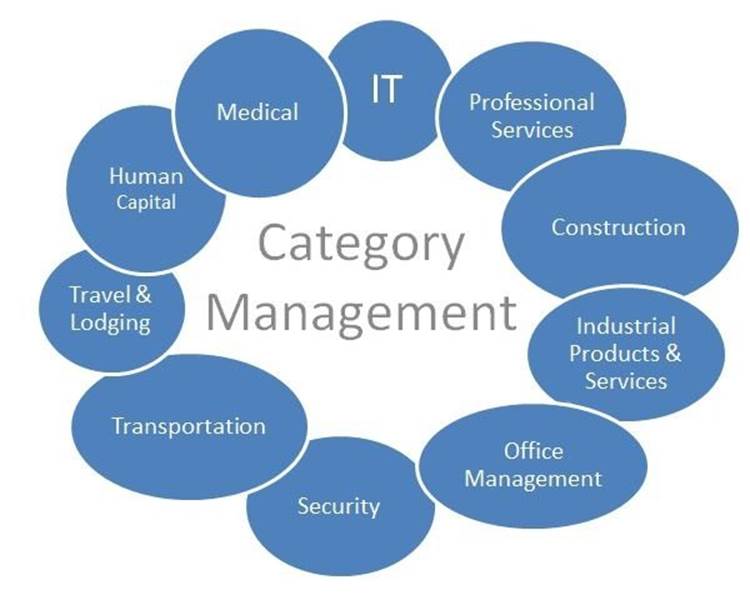
Among the most popular vendor management techniques used in corporations are strategic sourcing and category management. There is frequent confusion among stakeholders about the use of terms, but both are distinct, with one catering to short-term needs and other long-term procurements.
Considering them to be the same or using the term interchangeably can be wrong. Unless one understands the similarities and differences between the two widely used procurement techniques, organizations cannot strike optimum procurement levels.
To avoid the failure in recognizing the technique that needs to be employed for a given shipment, let us check the what is category management and strategic sourcing wider definition:
Category management
The core idea behind category management is grouping different products under one category. For instance, a dairy in a supermarket refers to all the milk products such as toned and extra fat milk, different varieties of cheese, and butter. It also includes a host of other products that can be made from milk, such as buttermilk and yogurt.
Grouping into a single category allows better administration and commercial viability. A large group of companies can broadly categorize information technology, human resource, administration, and production as examples of categorization. Category management is an ongoing process with long-term organizational goals that frequently focus on:
- Aggregating the spending
- Easing business solutions
- Cutting costs through effective bargaining
- Mitigating vendor-risk
- Improving the buy-to-pay procedure
Category management calls for complete awareness about the purchase demands of an organization, spending, availability of products or services, vendors, and market trends.
Strategic sourcing
A popular procurement technique is strategic sourcing which aims at meeting organizations’ purchase demands with minimum costs and maximum value. It is not an ongoing process and is used only on an ad-hoc basis for immediate organizational goals that can be met through other procurement methods. It still is very useful for meeting some critical procurement goals and aids in:
- Value-additions to the company
- Bringing down procurement costs
- Improving inventory controls
- Reducing purchase expenses
- Verifying the quality of goods received
Strategic sourcing involves planning, procurement, and vendor performance measures that ensure project sourcing is completed without hurdles.
Key similarities
- Both modalities involve market research and insight analysis to assess organizations’ procurement demands. Under these methods, the emphasis is on evaluating the current spending patterns and finding solutions to reduce costs.
- In supply chain management, category management and strategic sourcing are utilized. Strategic sourcing improves the efficiency of the supply chain during critical ad-hoc needs specifically during project sourcing. Category management aims at reducing costs throughout the procurement cycle by bargaining for bulk categories instead of single SKUs.
- In terms of alignment of values, goals, and teamwork, both concepts bridge the gap between the organization and the vendor stakeholders. A vendor who is associated for the long term is not willing to lose a long-standing client for a slight margin and is willing to negotiate competitively.
Key differences
- The primary difference between the two methods is that category management is a long-term and ongoing strategy. Whereas strategic sourcing is an ad-hoc tact that is used as a process.
- From a holistic point, strategic sources can be part of category management. Therefore strategic sourcing is a subset of category management. Within category spending, price negotiations can bring the level down by employing strategic sourcing.
- Strategic sourcing aims at reducing costs at every stage of the supply chain to bring the overheads down. Category management’s goal is to add value to vendor relationships and focus on common goal setting between the organization and the vendor for long-term partnerships.
- Cost reductions can be a one-time affair with strategic sourcing. But when vendor relations are in place, there is a guarantee of a consistent supply of material even during market constraints on a priority basis from the vendors.
How and when to use strategic sourcing and category management?
If you make or sell many SKUs, then value-additions and goal objectives through category management will ensure that there is a consistent supply to meet the procurement demands without leading to delays.
Strategic sourcing as iterated can be employed within category spending to minimize overall costs. On its own also strategic sourcing can be used on an ad-hoc basis with the single purpose of reducing costs through better product identification, negotiation parameters, and market research.
Digital tools to enhance category management and strategic sourcing
Technology advancements have been always on the rise for effective tools that can analyze large chunks of data and automate repetitive data recognition patterns for seamless category management solutions.
Any organization aiming for business excellence in the future will depend on its ability to learn, respond, and evolve. It is the same for supply chain management solutions, and techniques like category management can be automated, through digital platforms.
This advanced software provides intuitive decision-making on the fly by scanning large chunks of data and detailing the finding accurately within a few minutes. The insights come with a call to action recommendations that will increase the visibility of the organization just by getting a few functions right.
Conclusion:
If in the market for category management solutions that look into a robust system that can integrate with current enterprise seamlessly while automating the whole data crunching through business intelligence tools.
Automation will take care of repetitive tasks and reduce the time taken and human errors completely. Advanced semantics records changes in the task, and all the collaborators come to know about the changes immediately.
With barriers of communication reduced between the organization and the vendors, one can expect a smooth workflow without hindrance. Any changes in the market trends are captured through sensitive radar reading and market analysis for a deeper understanding of future procurement decisions through automated category management platforms.
You may like
Business
8 Common Mistakes Businesses Make When Adopting SaaS
Published
1 month agoon
November 28, 2025By
admin
Software as a Service (SaaS) has altered the manner in which contemporary businesses are conducted. Whether it is streamlined workflow, lower infrastructure costs, or easy scalability, SaaS tools can considerably increase efficiency when applied properly.
Despite the convenience, a number of businesses falter in the adoption process because of preventable errors. Such wrong moves can easily result in budgetary wastage, agitated employees, and low ROI.
Knowing the most frequent pitfalls can help your business save a considerable amount of time and make sure that your SaaS investment is useful.
Top Major Mistakes Businesses Make When Adopting SaaS
There are several common errors companies make in implementing SaaS; this guide explores eight of them. You will also learn how to prevent them. Keep reading! Among the numerous errors most companies make while implementing the principles of SaaS into their operations, here are eight of them.
Failure to assess the needs of the business appropriately
Most organizations indulge in SaaS adoption merely because a solution is trending or suggested by other businesses. However, unless you evaluate your unique requirements, you can find yourself having features that you are not going to utilize, as well as a platform that is not going to address your actual problems.
Document your workflows before selecting a SaaS solution, notice gaps, and clarify the specific results you wish. This makes sure that the software is suitable for your actual operation requirements.
Disregard of the requirements of integration
The most common mistake is to believe that all SaaS tools will work with your systems. In the event that there is not a good fit between the tools, the data becomes fractured, leading to inefficiency and errors.
Always verify API compliance, integrations it can support, and its ability to fit into your technology stack. A SaaS product must not complicate your workflow; rather, it should improve it.
Undervaluing information protection issues
Pay attention to this! Security is often not given a second thought when it comes to the adoption of SaaS. Businesses believe that the cloud providers take care of all that, but this is seldom so.
You have to assess data encryption, compliance certification, backup policy, and access control. Ensure that the provider addresses your security requirements, particularly when dealing with sensitive or regulated information. Never underestimate information protection.
The inability to train staff adequately
The most potent SaaS tool cannot help at all when the staff is not aware of how to use it. A lot of business organizations implement new software without proper training or orientation.
This leads to resistance, confusion, and poor adoption rates. It should always be accompanied by training sessions, documentation, and internal champions to facilitate the transition. Always prioritize regular staff training, and give them the best.
Failure to assess pricing structures and concealed expenses
The costs of SaaS may be low initially; however, most organizations overlook such things as add-ons, advanced capabilities, storage, upgrades based on user limits, or even long-term subscriptions.
Look into the complete ownership cost before subscribing. Take into account upgrades, scaling requirements, and possible additional charges. An open-price system is a crucial aspect in preventing unexpected costs.
Making decisions without trying out the tool
Companies tend to bypass trial periods and immediately bind themselves, only to realize that the software is not as good as promised.
Never miss a free trial or a demo. Test experience, speed, performance, and key features with actual team members. This practical methodology creates clarity and avoids expensive regrets.
Ignoring change management
The move to SaaS is not merely a technical one, but a cultural one, as well. In case the leadership fails to communicate the rationale behind the change or fails to engage employees in the transition, the outcome will be resistance and slow adoption.
There must be good communication, a rollout plan, and a timetable. The employees should be made to know the benefits of the new tool to both the organization and the employees.
Failure to keep track of performance and ROI post-adoption
Some businesses install SaaS and believe that the work is completed. However, SaaS success requires constant assessment.
You have no idea whether the tool is generating value without measuring usage, performance, metrics, cost effectiveness, or user satisfaction. Periodically audit and obtain feedback to streamline your configuration.
Conclusion
Implementing SaaS can become a revolution in the business, yet it is possible only when taken seriously. With the help of the eight common mistakes that can be avoided above, you will lay the groundwork for a smooth and successful transition.
Go into SaaS with objectives, strategic planning, and evaluation. SaaS, when properly implemented, can increase productivity, automate operations, and provide your team with technology that scales with your business. Finally, you should contact Celesta Tech to help you avoid these mistakes.
Business
Which Business Model Is Most Common for Insurance Companies?
Published
1 month agoon
November 25, 2025By
David Smith
Companies in the insurance industry are built on the assumption and diversification of risk. As a fundamental part of the insurance model, risks from individual payers are pooled and re-distributed. The vast majority of insurance companies generate revenue from two sources: charging premiums for coverage and investing those premiums in other interest-producing assets. A private business, such as an insurance company, aims to maximize its profitability and minimize its overhead.
Aspects of pricing and risk assumption
The revenue models of health insurance companies, jewellery insurance companies, and financial guarantee companies differ. As an insurer, your main responsibility is to price risk and charge you a premium for taking on that risk.
Consider an offer of a $100,000 conditional payout from the insurance company. Based on the length of the policy, the company must assess the likelihood that a prospective buyer will trigger the conditional payment.
An insurance underwriter’s role is crucial in this regard. Insurance companies cannot assume risks properly without a good underwriting process. In the long run, this could cause rates to increase even more by pricing out low-risk customers. It is advised that a company price its risk effectively if it is to bring in more revenue from premiums than it does from conditional payouts.
A claim is really an insurer’s product in a sense. An insurance company must process, verify, and pay claims when a customer files one.
Using this procedure will reduce the risk of loss to the company by excluding fraudulent claims.
Revenue and earnings from interest
If the insurance company receives $1 million in premiums, then it will reveal how much it will have to pay out. Cash or savings accounts are the least efficient ways to hold onto money. At the very least, those savings are at risk of inflation. Rather, it can invest in short-term assets that are safe. While the company waits for possible payouts, it earns additional interest income. Treasury bonds, corporate bonds with high credit ratings and interest-bearing cash equivalents are common instruments of this type.
A reinsurance policy
The purpose of reinsurance is to reduce risk for some companies. As a form of protection against excessive losses, insurance companies buy reinsurance coverage. The purpose of reinsurance is to sustain insurance companies’ solvency and avoid defaults resulting from payouts. Regulators stipulate that certain companies must reinsure.
A company may insure too much for hurricanes if its models predict there will be little damage caused by a hurricane in a particular geographical area. Hurricanes hitting that region could cause significant losses to the insurance company if the inconceivable were to occur. The insurance industry could go out of business if there was no reinsurance to take some of the risks off the table.
Until a policy is reinsured, the government requires insurance companies to cap their policies at 10% of their value. Because reinsurance can transfer risks, insurance companies can compete more aggressively to capture market share. Besides smoothing out insurance company fluctuations, reinsurance eliminates significant net loss and profit variances.
Insurance companies often operate like arbitration companies. When they insure bulk policies, they receive cheaper rates than if they insure individual policies.
Evaluation of insurers
A reinsurance program helps to maintain the stability of the insurance market by smoothing out fluctuations.
Companies in the insurance sector are evaluated based on profitability, growth prospects, payouts, and risk, just as they are for any other non-financial service. However, there are also matters specific to the insurance sector. A small amount of depreciation and a very small capital expenditure are recorded by insurance companies because they do not make investments in fixed assets.
Furthermore, there is no standard working capital account for insurers, making it difficult to calculate their working capital. Analysis focuses on equity indicators, such as price-to-earnings (P/E) and price-to-book (P/B) ratios; firm and enterprise values are not taken into consideration. To assess each company, analysts use insurance-specific ratios computed from the company’s financial statements.
Companies that are expected to grow, pay out high amounts, and have low risk usually have higher P/E ratios. Insurance companies with low risks, high payouts, and high return on equity have higher price-to-book valuations. The biggest impact on the P/B ratio is the return on equity when everything else is constant.
Comparing P/B and P/E ratios across insurance companies may complicate the analysis. It is the responsibility of insurance companies to make provision for future claims. It is possible for this ratio to be too high or too low if the insurer is too conservative or too aggressive in estimating such provisions.
Furthermore, the level of diversification in the insurance sector hinders comparability. The vast majority of insurers engage in one or more distinctive insurance businesses, such as property, casualty, and life insurance. The P/E and P/B ratios of insurance companies differ depending on the degree of diversification each company has.
Business
A Guide To Getting Bankruptcy Off Your Credit Report
Published
1 month agoon
November 24, 2025By
David Smith
How do you feel about the decisions you have made in the past? Could you remove your bankruptcy from your credit report if you knew how? You may have a hard time understanding credit. Here is a simple explanation. Having taken the step to help your credit improve, do you feel ready to continue?
Friends and family members who have experienced bankruptcy have talked to us. Unfortunately, bankruptcy has become more common in modern society. Making credit accessible and straightforward is what we strive for. You can improve your credit and your life by learning how to remove bankruptcy from credit reports.
Here’s what you’ll need
If you have been bankrupt for 7-10 years, your credit report will automatically be cleared of the bankruptcy. Is it possible to remove the bankruptcy earlier?
You have a better chance of being approved for a mortgage, car loan, or other type of credit if you avoid bankruptcy. Any type of loan or credit is difficult to obtain following bankruptcy. You may feel even worse after you declare bankruptcy. The process of removing bankruptcy is long and tedious, but it would be worthwhile to try.
Getting Your Credit Report Removed After Bankruptcy
1. Keep track of your credit score
Your credit score will need to be monitored throughout the entire process. Request your credit reports at the beginning of the process. You can find your credit reports at three credit bureaus in the United States. TransUnion, Experian, and Equifax transcripts are needed. Each agency must provide you with these reports upon request. In the past 12 months, you have been entitled to free credit reports from each of the credit bureaus. It’s possible to collect them all at once or over the course of the year.
It is possible to request online, over the telephone or by mail. For specifics on submitting your request and how to respond in the event it is denied, please consult the government site. You might also consider signing up for an online credit monitoring service to keep track of your credit, so you can plan your next steps.
2. Performing a verification check
The credit bureaus will need to verify whether or not your bankruptcy has been verified. Make the same request to each company separately. I need a letter to be sent to you. The credit bureau must respond within 30 days to any dispute. Remember, the process has already begun, so be patient.
The credit bureau usually responds with a statement stating that the court verification was successful. However, this is rarely the case, but if it is, it is to your advantage. Court verification is not always conducted by credit bureaus.
Be sure to ask who they verified it with in the original letter, so that you can move on to the next step quickly.
3. Get in touch with the courts
Having asked the court the same question now, you will want to contact them. If the court verified your bankruptcy, how did they do that?
Ask to see a written statement if the court says they never verified bankruptcy – as is often the case. For more information, visit bankruptcylawyerinstatenisland.com.
4. Provide the credit bureaus with the courts’ response
With a letter asking for the bankruptcy to be removed, send the court’s statement to the credit bureaus. Identify the claims raised by the bureau that they provided false information in violation of the Fair Credit Reporting Act.
It should be possible to remove bankruptcy if everything goes well.
5. Continue to follow up
Credit bureaus do not guarantee that they will remove the bankruptcy just because they said they would. Watch your credit closely and reach out to a credit expert if nothing changes. Having a professional follow up on your behalf is advantageous, as they will look out for your future credit.
Here are some helpful tips
To remain calm and rational throughout the entire process, at the very least in writing, is crucial. Requests which do not follow the appropriate procedure are shut down by credit bureaus. Stay technical and factual in your letters and don’t show emotion.
Earlier bankruptcy filings are more likely to be removed. Evaluate whether you have time to wait if your bankruptcy was relatively recent. If your initial attempt is rejected, try again after some time has passed. It may only take a couple of years to get their approval instead of ten.
It is important to remember that everyone’s credit situation differs. Despite my best efforts, there may be some scenarios where it does not work. There is no harm in trying.
Final Thoughts
What did you think of my credit report removal tutorial? In an attempt to prevent you from removing bankruptcy, credit bureaus go to great lengths.
Eventually, it will no longer appear on your credit report. However, you can start the process much sooner. I am interested in assisting as many people as I can today who are experiencing bankruptcy. As a professional lawyer, I am able to share my knowledge with you. Helping you get good credit can make life much better for you.
Are you encountering this problem for the first time? Perhaps you’ve tried and failed before or have learned from past mistakes. We would like to hear from you in the comments below.
How Can You Make Your Office Presentations Clear and More Engaging?
Minishortner.com What Is Site Map for SEO? A Detailed Explanation for Website Owners
8 Common Mistakes Businesses Make When Adopting SaaS
7 Tips for Developing Apps for Foldable Smartphones
Types of Deep Learning Networks
All You Need to Know About Digital Marketing
5 Gadgets You Need For An Outdoor Trip
Time to Claim Free 30-Days Trial of Discord Nitro
Which Business Model Is Most Common for Insurance Companies?
How to Take Screenshot on iPhone 11?
Trending
-
Tech2 years agoThe Evolution of Mobile Technology: Past, Present, and Future
-
Gaming3 months agoIs the Forest Cross Platform or Not – Find Out All You Need to Know!!
-
Business3 years agoIs It Beneficial To Learn Business Analytics In 2023?
-

Gaming2 months agoIs Europa Universalis 4 Cross Platform Multiplayer?