Connect with us

Digital Marketing

The Role of Long Tail Keywords in SEO

Published

on

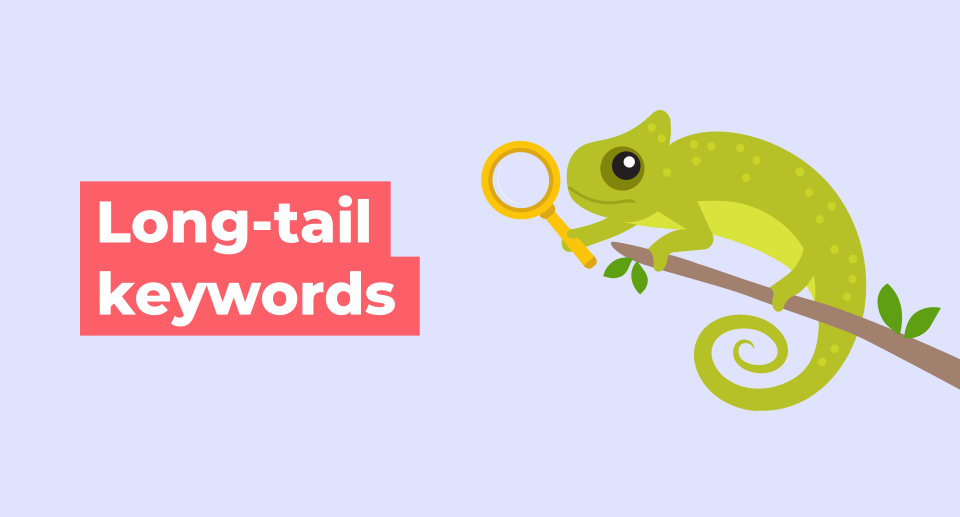
Long Tail Keywords

Have you recently created your own website? Those who did must be looking for ways to gain a high target.

Even after trying hard and giving in all your efforts, most of you end up benefiting nothing. All that people do is think if they are ever gonna make it !! It seems nearly impossible due to high competition.

If you are feeling stuck and planning to give up on your dreams, then hold your move for a while and Wait !! Here is something we’ll reveal that can hold you back. So wait for a while and give it another shot for the much-desired Change!

In order to get high traffic one needs to come up with creative solutions or amazing ideas. When talking about creative solutions, the first thing that comes to mind is the Long-Tail- Keywords.

They offer perfect solutions when there’s high competition in the market.

But do you know what exactly this long-tail keyword is? Or whether it is really going to change the scenario?

Well, that’s what we’re going to discuss here in detail. So stay tuned!

What Are Long-Tail Keywords? 

We can define Long-tail keywords as keyword phrases that are three or more words long. These are quite specific in nature and focus more on the exact niche.

Long-tail keywords come to the rescue when the competition is high in the market. It helps businesses to attract visitors with specific searches easily.

For example: let’s assume that you own a candy shop. Then what would you choose as your primary keyword? Obviously, it will be a “candy shop”.

Due to much competition, chances are your page will never appear on the top if it’s a new site and the authority score is low. But if you specialize the keyword and make it a “chocolate and vanilla candy shop”, do you know what will happen?

Soon you would be attracting consumers looking for the exact same product, and it reduces the competition immediately! Voila, that’s what the long-tail keywords do in real- reducing the competition and fetching a more targeted audience!

What are the Benefits of Using Long-Tail Keywords? 

Didn’t anyone tell you about the benefits of using Long-tail keywords? Surely because most of them are not aware of its true importance. But wait !! If you want to see your website grow, do not miss to know about its benefits.

Check out below to dive deep into knowing more about long-tail keywords.

  • Promotes short-tail keywords 

Using long-tail keywords helps the websites to rank for the short-tail keywords as well.

  • Optimization

Who does not want to stand tall by fulfilling the demands of the audience? It’s a dream of every website. With long-tail keywords, you can expect to optimize the blog’s strategy.

In simple words, you would get the insights of audience searches. This further helps one to create valuable content that the audience wants to see.

  • Personalization 

Using long-tail keywords means you get to personalize your content more. It helps one to create multiple pieces of content that support various services that your business offers.

In short, it allows websites to be more targeted towards their audience by covering multiple queries of your audience.

  • Future Preparations

Long-tail keywords help in preparing a website for its future because they bring more organic visitors and establish the idea of a strong community base. Besides, they are the heart of Google’s search engine algorithm.

Know About Long-Tail Keywords Role in SEO !!

Wondering what is the role of Long-Tail keywords in SEO? Those who are unaware, know that long-tail keywords are the heart of a niche website. Websites that do not target much or get higher conversion use long-tail keywords to get the right traffic with minimal effort.

Moreover, it helps SEO experts to boost their SEO. You must be thinking about how you can introduce these keywords in your content. Well, like we said we’ll discuss all of it. Here you go!

You don’t need to worry at all. In order to use long-tail keywords appropriately, include them in headlines, subtitles, introduction, and body section relevantly.

Once you are done, it is obvious you are aware of the next step. Aren’t you? For those who are not, all you need to do is to publish the content on online platforms.

Soon you will witness a boost in the SEO of your website. It’s great to observe your site growing with the most desired organic traffic!

Digital Marketing

Minishortner.com What Is Site Map for SEO? A Detailed Explanation for Website Owners

Published

on

By

Minishortner.com What Is Site Map for SEO

Search engine optimization (SEO) continues to evolve every year, but one element remains consistently important: sitemaps. Whether you run a personal blog, an eCommerce store, a corporate website, or a newly launched startup platform like Minishortner.com, understanding how sitemaps work can dramatically improve your website’s chances of ranking on Google and other search engines.

If you have ever wondered, “How do search engines understand my website structure?” or “How can I help Google discover all my pages quickly?”—the answer is simple: a sitemap.

In this comprehensive guide, we will unpack everything about sitemaps: what they are, why they are crucial, how they boost SEO, how to create one, how to submit it, and common mistakes to avoid. This long-form guide is designed for website owners, marketers, bloggers, developers, and especially beginners searching for a clear explanation of how sitemaps support SEO.

This guide will also discuss how modern platforms—such as URL shortener services, micro-sites, and content-based portals—benefit from sitemaps. If you are researching a topic like “Minishortner.com What Is Site Map for SEO”, this article will give you the full breakdown you need.

What Is a Sitemap?

A sitemap is a file—usually in XML format—that lists all important pages of your website. This file helps search engines like Google, Bing, and Yahoo understand your site structure and discover new or updated content faster.

Sitemaps act like a navigation map for search engine crawlers. Instead of trying to figure out your website on their own, crawlers use your sitemap to identify:

  • Which pages exist

  • Which ones are most important

  • When they were last updated

  • How often they change

  • How pages are linked

In short, a sitemap ensures that search engines never miss important content on your website.

Why Sitemaps Are Crucial for SEO

Sitemaps directly improve SEO by helping search engines:

✔ Discover Pages Faster

If your website is new or has low domain authority, search engines may not frequently crawl it. A sitemap ensures Google knows exactly where all your pages are located.

✔ Index More Pages

Without a sitemap, some of your pages may never be indexed, which means they will never appear in search results. A sitemap boosts the chances of indexing every important page.

✔ Understand Website Structure

This is especially helpful for:

  • eCommerce sites with thousands of products

  • Blogs with hundreds of posts

  • Dynamic sites that generate new pages frequently

✔ Improve Crawl Efficiency

Search engines have limited crawl budgets. Sitemaps help guide crawlers to your priority pages.

✔ Highlight Important Updates

If you update content regularly, your sitemap can tell Google to re-crawl the updated pages sooner.

This is why SEO experts frequently mention the importance of tools like Google Search Console combined with accurate sitemaps.

Types of Sitemaps Explained

There are multiple types of sitemaps, each with different use cases. Understanding the differences helps in creating a well-organized sitemap strategy.

1. XML Sitemaps (Most Important for SEO)

XML sitemaps are designed for search engines. They contain URLs and metadata such as:

  • Last modified date

  • Priority

  • Change frequency

These are the most essential sitemaps for SEO.

2. HTML Sitemaps (For Users)

HTML sitemaps help human visitors navigate your website. They are typically displayed as a simple webpage listing all links.

3. Image Sitemaps

Used for websites relying heavily on image search traffic—like photography, ecommerce product listings, and design portfolios.

4. Video Sitemaps

Useful for websites where videos play a crucial role. Helps Google index video content and display rich results.

5. News Sitemaps

For news publishers who require rapid indexing in Google News.

6. RSS/Atom Sitemaps

Automatically updated feed-based sitemaps, often used for blogs with frequent new posts.

How Sitemaps Work Behind the Scenes

Search engines send out crawlers (bots) to scan your site. When these crawlers land on your domain, they look for your sitemap file, typically located at:

If found, they use the sitemap to:

  1. Read each URL entry

  2. Identify the last updated timestamps

  3. Prioritize the crawling

  4. Index the content if valuable

In a sense, the sitemap helps search engines use their crawl budget efficiently and discover deep pages that might not be linked well internally.

Do All Websites Need a Sitemap?

Google states that even though sitemaps are not mandatory, they are highly recommended for most websites.

You especially need a sitemap if your website:

  • Is new

  • Has fewer backlinks

  • Contains thousands of pages

  • Has poor internal linking

  • Uses multimedia content (videos, images, news)

  • Is dynamic (user-generated content)

  • Has multiple categories or subdomains

Even small websites benefit from sitemaps because they improve indexing speed and accuracy.

Benefits of Sitemaps for Small, Medium & Large Websites

Sitemaps offer different advantages depending on the size of the website.

For Small Websites

  • Quicker indexing

  • Ensures new pages aren’t missed

  • Boosts visibility for low-authority domains

For Medium Websites

  • Helps SEO when multiple categories or content sections exist

  • Improves crawl coverage

  • Ensures old/hidden pages remain discoverable

For Large Websites

  • Essential for ecommerce with thousands of product pages

  • Helps Google identify canonical URLs

  • Prevents crawl budget wastage

  • Supports multiple sitemap files through a sitemap index

Understanding XML Sitemap Structure (With Example)

A basic XML sitemap looks like this:

<?xml version="1.0" encoding="UTF-8"?>
<urlset xmlns="http://www.sitemaps.org/schemas/sitemap/0.9">
 <url>
  <loc>https://yourwebsite.com/</loc>
  <lastmod>2025-01-10</lastmod>
  <changefreq>weekly</changefreq>
  <priority>1.0</priority>
 </url>
 <url>
  <loc>https://yourwebsite.com/blog</loc>
  <lastmod>2025-01-08</lastmod>
  <changefreq>daily</changefreq>
  <priority>0.8</priority>
 </url>
</urlset>

This tells Google:

  • Which URLs exist

  • When they were last updated

  • How important they are

How to Create a Sitemap

You have two main options: automated and manual creation.

Automated Methods (Recommended)

1. Using CMS Plugins

If you use WordPress:

  • Yoast SEO

  • Rank Math

  • All in One SEO

These plugins auto-generate sitemaps and update them automatically.

2. Using Online Sitemap Generators

Tools like:

  • XML-Sitemaps.com

  • Screaming Frog SEO Spider

  • Sitebulb

  • Ahrefs / SEMrush (advanced)

3. Server-Side Auto-Generated Sitemaps

Frameworks like Laravel, Django, Node.js, or Shopify auto-generate dynamic sitemaps.

Manual Sitemap Creation

If your website is static:

  • Create an XML file

  • List each URL manually

  • Upload to your server

For large sites, this is not feasible—use automation instead.

How to Submit Your Sitemap to Search Engines

Once your sitemap is ready, submit it to major search engines.

Google Search Console (GSC)

  1. Go to Indexing → Sitemaps

  2. Enter your sitemap URL

  3. Click Submit

Google will:

  • Fetch your sitemap

  • Analyze your URLs

  • Begin indexing them

Bing Webmaster Tools

Similar to GSC, Bing also allows manual sitemap submission.

Automatically Through Robots.txt

Add this line:

Search engines will find it even without manual submission.

Sitemaps vs Robots.txt – What’s the Difference?

Many beginners confuse sitemaps with robots.txt. But they serve different purposes.

Sitemap

  • Lists pages you want indexed

  • Helps search engines navigate

  • Improves crawling efficiency

Robots.txt

  • Blocks pages from crawler access

  • Controls which pages Google should not crawl

Think of it like this:

Sitemap = “Please crawl these pages.”
Robots.txt = “Don’t crawl these pages.”

How Sitemaps Improve Crawling & Indexing

✔ Improves discovery of deep pages

Pages several clicks away from homepage are difficult for bots to find.

✔ Ensures less-crawled pages are noticed

Even rarely updated pages get attention.

✔ Helps recover from SEO problems

If you fix broken links or add redirects, sitemaps accelerate reindexing.

✔ Guides bots in structured websites

Especially in ecommerce or multi-category blogs.

✔ Improves ranking potential

Indexed pages → Eligible for ranking.

How to Optimize Your Sitemap for Better SEO

Optimization matters. Not all sitemaps are equal

1. Include Only Canonical URLs

Don’t include:

  • Duplicate content

  • Pagination

  • Tag/category duplicates

2. Keep Sitemap Files Under 50,000 URLs

Or 50 MB in size.

If your site is larger, split into multiple sitemaps and create a sitemap index.

3. Update Frequently

If content changes, ensure your sitemap reflects it.

4. Remove Error Pages

Do not include:

  • 404 pages

  • Redirect URLs

  • Noindex pages

5. Use Priority Tags Carefully

Don’t mark every page as 1.0—Google ignores it if abused.

Sitemap Best Practices for 2025 and Beyond

As search algorithms evolve, sitemaps must keep up.

✔ Use dynamic sitemaps

Auto-update with site changes.

✔ Maintain fast-loading pages

Sitemaps help crawlers, but slow pages still harm indexing.

✔ Use separate sitemaps

  • Image sitemap

  • Video sitemap

  • Blog sitemap

  • Product sitemap

  • Sitemap index

✔ Optimize URL structure

Use clean, descriptive URLs.

✔ Monitor Sitemap Errors in Google Search Console

Fix issues like:

  • “Submitted URL not found”

  • “Crawled but not indexed”

  • “Duplicate without canonical”

Common Sitemap Mistakes to Avoid

❌ Including noindex pages

These confuse search engines.

❌ Listing URLs blocked by robots.txt

This creates conflicts.

❌ Broken URLs in sitemap

Should be corrected immediately.

❌ Not updating sitemap after structural changes

❌ Adding every single URL (unnecessary pages)

Only include high-value URLs.

Advanced Concepts: Dynamic Sitemaps, Image Sitemaps, Video Sitemaps & More

For modern SEO, these advanced sitemap types boost visibility.

Dynamic Sitemaps

Automatically update when content changes—especially useful for:

  • Blogs

  • Ecommerce sites

  • News publishers

Image Sitemaps

Include image URLs with metadata:

  • Captions

  • Geo-location

  • License information

Boosts Google Image Search performance.

Video Sitemaps

Add video metadata:

  • Duration

  • Category

  • Tags

  • Thumbnail

Helps your website earn rich video snippets.

News Sitemaps

Reserved for registered Google News publishers.

How Platforms like Minishortner.com Can Benefit from Sitemaps

If someone is searching for “Minishortner.com What Is Site Map for SEO”, they are likely interested in how a URL-shortening platform, blog tool, or micro-site service can utilize sitemaps.

Here’s how:

✔ Faster Indexing of Public Pages

If Minishortner.com has:

  • Publicly accessible URLs

  • Blog posts

  • Help documentation

  • User-generated landing pages

A sitemap helps Google identify them quickly.

✔ Better Search Visibility

If Minishortner.com offers SEO-based tools or link management services, having a proper sitemap strengthens domain structure.

✔ Improves Trust and Domain Authority

Technical SEO improvements like sitemaps indirectly improve authority signals.

✔ Helps Showcase Platform Features

If Minishortner.com publishes feature pages, API docs, tutorials, etc., sitemaps ensure these rank properly.

Mentioning the keyword naturally:

A website owner researching Minishortner.com What Is Site Map for SEO will understand why even lightweight platforms benefit from sitemap implementation.

Frequently Asked Questions (FAQ)

1. Is a sitemap required for SEO?

Not required, but highly beneficial.

2. How long does it take for Google to index pages using a sitemap?

Typically a few hours to a few days.

3. Should I include every page in my sitemap?

No — only important and indexable pages.

4. How often should I update my sitemap?

Whenever new content is added or major updates occur.

5. Can I have multiple sitemaps?

Yes, especially for large websites.

Final Thoughts

Sitemaps may seem technical, but they remain one of the simplest and most powerful SEO tools available. A well-structured sitemap guarantees that your website is fully crawlable, efficiently indexed, and discoverable by search engines. Whether your site is large or small, static or dynamic, new or established — a sitemap will always offer SEO benefits.

If you are looking to understand “Minishortner.com What Is Site Map for SEO”, the answer is straightforward: a sitemap is a digital blueprint that helps search engines understand and index your website effectively. By implementing, optimizing, and maintaining a proper sitemap, you give your website a strong technical foundation and a much better chance of ranking higher in search results.

When used correctly, sitemaps can significantly improve search visibility, boost organic traffic, and enhance user experience — making them essential for any website owner serious about SEO.

Continue Reading

Digital Marketing

All You Need to Know About Digital Marketing

Published

on

By

Digital Marketing

In recent years, Digital Marketing has become a vital component in every company and organization. It provides a wide variety of marketing tactics and technologies.

Nowadays, every business is switching to digital marketing options and their overall growth depends on the same. Why shouldn’t it be? When we are living in the era of the internet and technologies.

Are you wondering why digital marketing is booming these days? Here’s everything you need to know about Digital Marketing.

What is Digital Marketing?

Nowadays, people’s usage of the internet has increased tremendously. From finding a store nearby to finding any important data, people are fully relying on the internet.

Whether you call it digital marketing or internet marketing, it is the most effective and least expensive way to grow a business. In simple words, it is marketing through the internet with the help of the most cost-effective way.

Be it small or large businesses, Digital marketing has something to offer to everyone. It helps in creating awareness and trust about one’s product and services or brand through digital devices.

What makes an effective Digital Marketing Campaign?

With the rapid use of the internet and an increasing number of competitors in the digital marketing field, one must make sure that they always use a different strategy from others; a unique one! You need to have a unique strategy to beat the existing competition and rise above.

If you also fall in the category of now knowing from where to start and how far to go, then here are some ways that make a digital marketing campaign effective :

  • Planning

Just like any business, digital marketing needs planning. It is the first step for the overall project that you are up to. One must understand his/her customers’ visions and available resources. And based on that, should proceed further.

  • Strategy

A company with no clarification in communication often fails in its digital marketing strategy. In order to follow the right strategy, one must know what they are offering to their customers.

By offering the right products and services, one can build loyalty, trust, and relationship with their clients. The short-term and long-term profits depend upon the strategy that you have in mind.

  • Opportunity

Every business owner must know the 7Ps of the marketing mix- the product, physical appearance, price, people, process, place, and promotion. Once you know the needs and wants of your audience, then targeting customers becomes easy.

This not only helps in turning leads into loyal customers but also brings new opportunities. Therefore, one cannot move forward in digital marketing without understanding the market first.

Why is Digital Marketing important for Business? 

As millions of monthly active users have their eyes on the internet and social media platforms, taking advantage of this for businesses is itself a great idea. Not only businesses but people have also become digital.

Customers are the key to every business and the entire digital marketing is created for building up the customer-seller relationship. The main advantage of digital marketing for business growth is that one can reach targeted audiences in a cost-effective way.

Many other things add to its advantages such as increasing sales and brand loyalty, global reach, cost-reduction, personalization, trackable campaigns, openness, social engagement, more conversion rates, and so on. Therefore, Digital Marketing helps a business to grow in all aspects.

Different Sectors of Digital Marketing!

As you have read up here, it seems that you too might want to be in the field of digital marketing. Hence, if you really have the zeal to become a digital marketing professional, here are some popular sectors of digital marketing to work on,

  • Search Engine Optimisation (SEO)
  • Pay-Per-Click (PPC)
  • Social Media Marketing
  • Content Marketing
  • Email Marketing
  • Mobile Marketing

Final Words

Therefore, Digital Marketing has become the conclusive game-changer. From gauging customer reaction, analyzing and collecting client feedback to evaluating campaign reach, you can control everything through digital marketing.

With the right strategy, businesses will come back stronger than before. Thus, Digital Marketing is beneficial for businesses of all sizes.

Continue Reading

Digital Marketing

IG Liker – Get Free Instagram Likes Without Limits

Published

on

Get Free Instagram Likes Without Limits

The number of Instagram likes still plays an important role today. Follow this post to get unlimited Instagram likes for your posts and stay popular.

2 weeks ago, we published a post about how to get more followers on Instagram. However, we realized that we need another article to help you get more likes. But this time, we will not talk about the traditional ways such as posting at the right time, using the right hashtags.

The reason? There are tons of guides on the internet full of those strategies. You already know those methods. On the other hand, those strategies take a lot of time and energy even they are still working.

In todays’ article, we will introduce a new way to acquire likes on Instagram through a tool. A tool? Which tool? Is it safe? How to use it?

Keep reading and find all answers below.

About IG Liker

The tool is called IG Liker which can help users get totally unlimited & free Instagram likes. The first time we saw unlimited and free, we doubted that. As far as we know, there is no tool in the world that can offer unlimited Instagram likes free of charge.

Then we clicked the “Get Free Likes” button on the homepage of its official site and it brought us to Google Play where we found its Android app called GetInsita which has got 1M+ downloads and 10K reviews.

Get Free Instagram

Without any hesitation, we installed this app in order to figure out how it works.

The Secrets of Free Likes & Followers

When we launched the app, it told us to create an account to continue. After signing up and logging in, this app told us to give our Instagram account username. It’s reasonable we thought. So as it wished.

getinsta

And then, some Instagrammers’ profiles showed up. And it seems that we can get 100 coins if we follow other Instagrammers.

Instagrammers’ profile

Besides following, we can also like others’ posts to get coins. However, the coins are 20, not 100.

get coins

And finally, we found the secrets of free likes and followers the moment we visited the store page.

instagram likes

The coins we earned by following others or liking their posts can be used to purchase(exchange) for likes and followers.

Therefore, IG Liker is based on following for following, liking for liking. You get followers and likes after you follow others or like their posts. It’s a fair deal to get free followers and likes. And because of this system, IG Liker slove the bot followers and likes problem.

3 Ways to Get More Coins

Apparently, the most important thing to get followers and likes with this app is to get as many coins as possible. There are 3 ways to get more coins.

First, get coins from the Daily Reward. Every day you use this app, you will be rewarded with some coins.

daily reward

Second, get coins from the Lucky Draw.

Lucky Draw

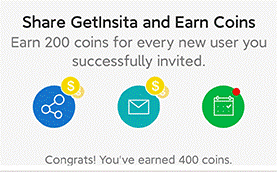
Third, share this app to get more coins.

earn extra coins

Get Auto Likes

Back to IG Liker’s official website, we found the Instagram auto liker page where we can see the advantages of having more Instagram likes and Instagram auto liker. IG Liker claims that they can help you get likes not only for your already published posts but also for your scheduled posts.

We already know that IG Liker is a liking for liking platform, which means your posts will be automatically recommended to other users. Once other IG Liker users like your posts, you will get free auto likes.

Conclusion

We have given you a simple review of an Instagram growth tool called IG Liker, which can drive you free Instagram followers and likes from 100% real accounts. Try this app today and grow your Instagram account with more organic followers and likes.

Continue Reading

Trending